|




















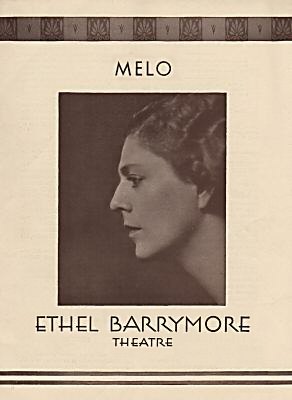
Melo
| A drama in three acts adapted by Arthur Pollock from the French play by Henri Berstein. Opened at the Ethel Barrymore Theatre, New York City, April 16, 1931, and lasted 67 performances. Produced by Lee Shubert, staged by Marcel Varnel. |
 |
Cast of characters
| Romaine Belcroix | Edna Best |
| Marcel Blanc | Basil Rathbone |
| Pierre Belcroix | Earle Larimore |
| Christiane | Ruth Abbott |
| Jeanne | Marion Wells |
| Dr. Remy | Harry Davenport |
| A Priest | Fuller Mellish |
| François | Stapleton Kent |
| A Professional Dancer | John Worthington |
| A Gigolo | Pierre Vistaud |
| A French Woman | Henriette Douvier |
| Another French Woman | Marie Maurier |
| A Maitre D'Hôtel | François Amiard |
| A Man | Robert Noble |
| Another Man | Arthur Stenning |
| Act I |
|
|
| Scene 1 — Garden of Belcroix's Home Near Paris Scene 2 — Marcel Blanc's Studio, Paris. Scene 3 — Russian Cabaret Scene 4 — Marcel Blanc's Studio |
||
| Act II | ||
| Scene 1 —
Living Room of Belcroix's Home Scene 2 — Marcel's Studio Scene 3 — Pierre's Bedroom Scenes 4 and 5 — On the Terrace of a Small Café |
||
| Act III | ||
| Scene 1 —
Terrace of Small Café Scene 2 — Home of a Priest Scene 3 — Marcel's Studio |
||
"The Belcroix, Romaine and Pierre, are living happily in a suburb of Paris
when Pierre's boyhood friend and fellow student at the conservatoire, Marcel
Blanc, comes to visit them. Romaine and Marcel are immediately attracted, each
to the other. Especially Romaine. After many visits Romaine and Marcel know that
they love each other helplessly. Marcel, a great violinist, is leaving on a
concert tour. When he returns to Paris he will expect Romaine to be freed from
his old friend, Pierre. Romaine can think of no way to be rid of her trusting
husband except by poisoning him, which she tries. Caught in the act she realizes
that she can neither go with Marcel or go back to Pierre. She throws herself in
the Seine. Pierre and Marcel thereafter patch up their friendship, both mourning
the dead Romaine."
[from The Best Plays of 1930-31, ed. by Burns Mantle (Dodd, Mead and
Co., 1931), page 517.]
"As confessed by its title, this play is a melodrama. It is also the first Manhattan presentation of a play by French author Henry Bernstein (The Thief) and the third appearance of the season for English actor Basil Rathbone. With two strikes against him for a pair of wild, unsuccessful swings he took in Heat Wave and A Kiss of Importance, Mr. Rathbone seems pretty sure of a base hit with Melo.
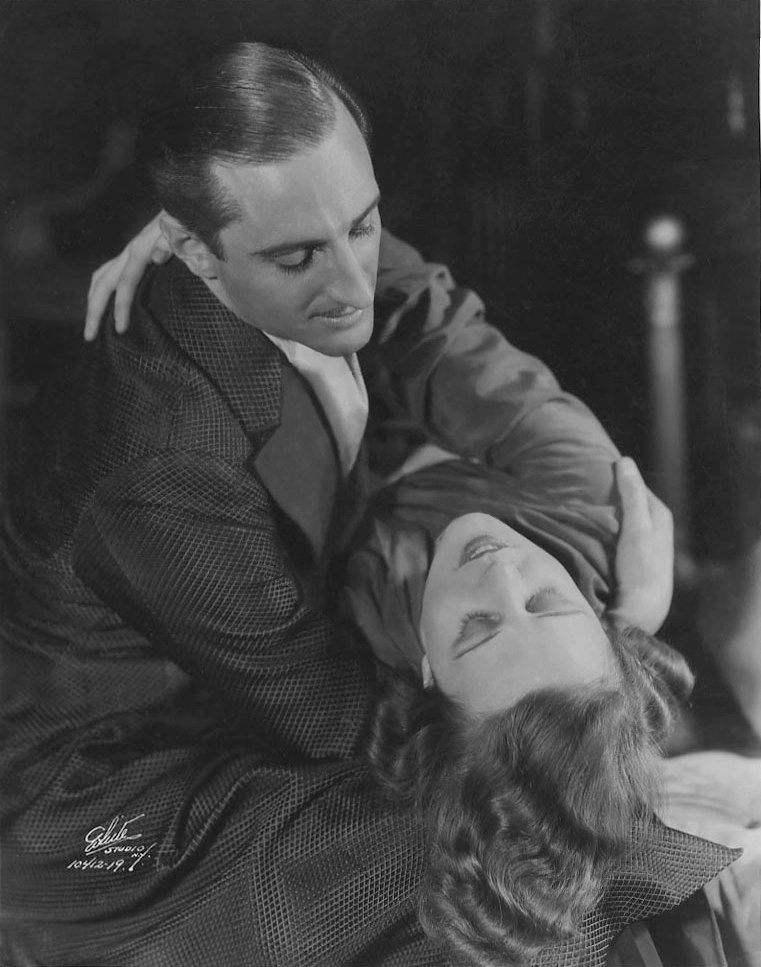
Pierre Belcroix (Earle Larimore), a journeyman musician, and his wife Romaine (Edna Best) are visited by an eminent amorist and violinist, Marcel Blanc (Mr. Rathbone). In no time at all the ancient triangle situation develops. As the curtain fall on Act I there is a charming scene in the virtuoso's apartment, with Miss Best lying in Mr. Rathbone's arms and humming Lehar's "Dein ist Mein Ganzes Hertz." In Act II, however, the affair becomes less idyllic. Miss Best tries to poison her husband while Mr. Rathbone is away on a concert tour. Detected by a doctor, she jumps into the most valuable body of water in the dramatists' atlas, the Seine. From this point on, Melo flags and falters. There is a tableau vivant around the dead woman's grave, followed by a long-winded scene at the violinist's home where the husband tries to get Mr. Rathbone to admit his philandering. Melo ends on an unclear and noncommittal note, possibly because plump, engaging actress Best is killed off one act too soon.
Shortcomings of Melo can in no way be laid to its cast. Miss Best's
interpretation is cool, crisp, sensible. She redeems a part which might very
well become wretchedly maudlin. A sort of British Hope Williams, her outstanding
U.S. successes have been in The High Road and These Charming People.
Basil Rathbone, smooth, slick, debonair, slides through his role with his
customary facility."
[Review in Time magazine, April 27, 1931, page 49.]
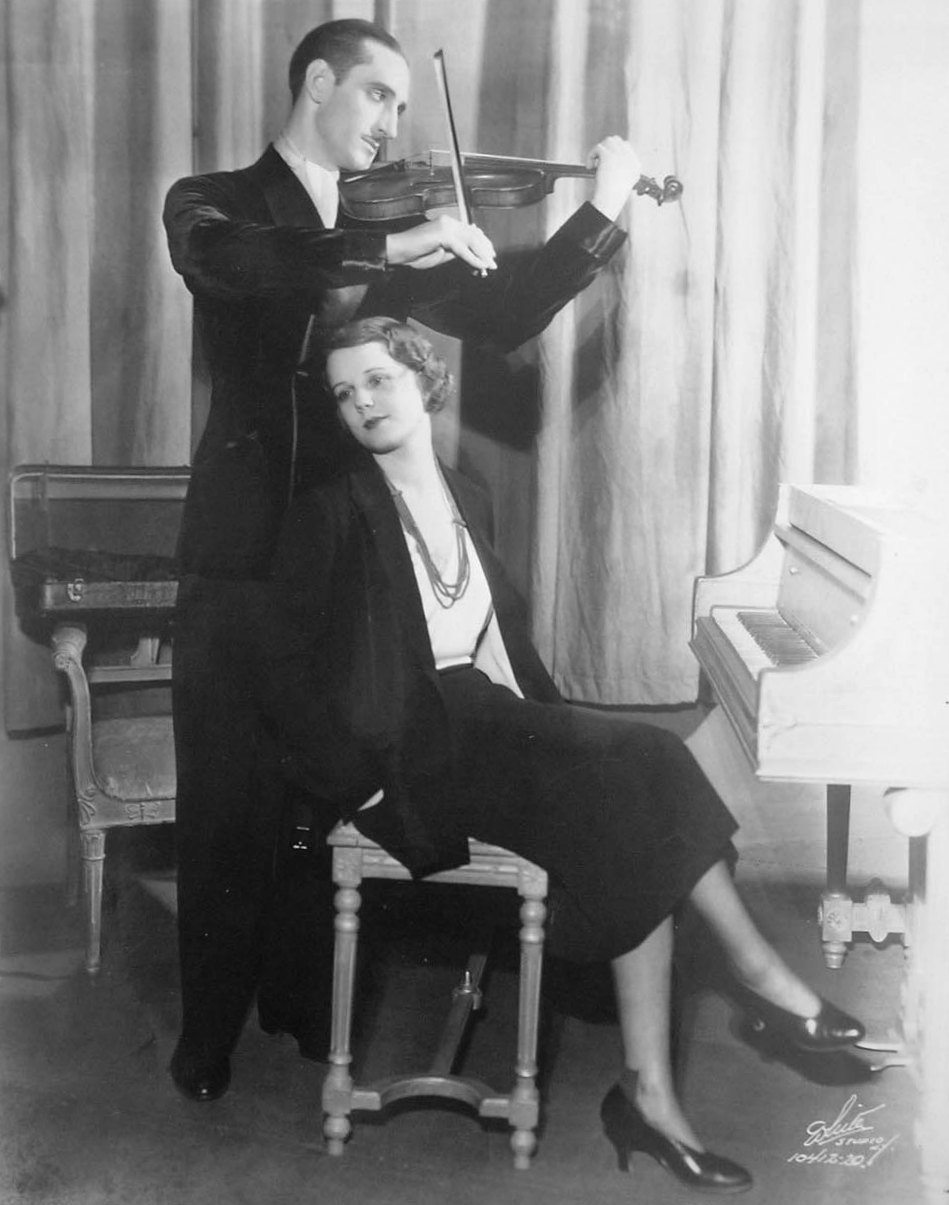 Basil Rathbone and Edna Best photo by White Studio |
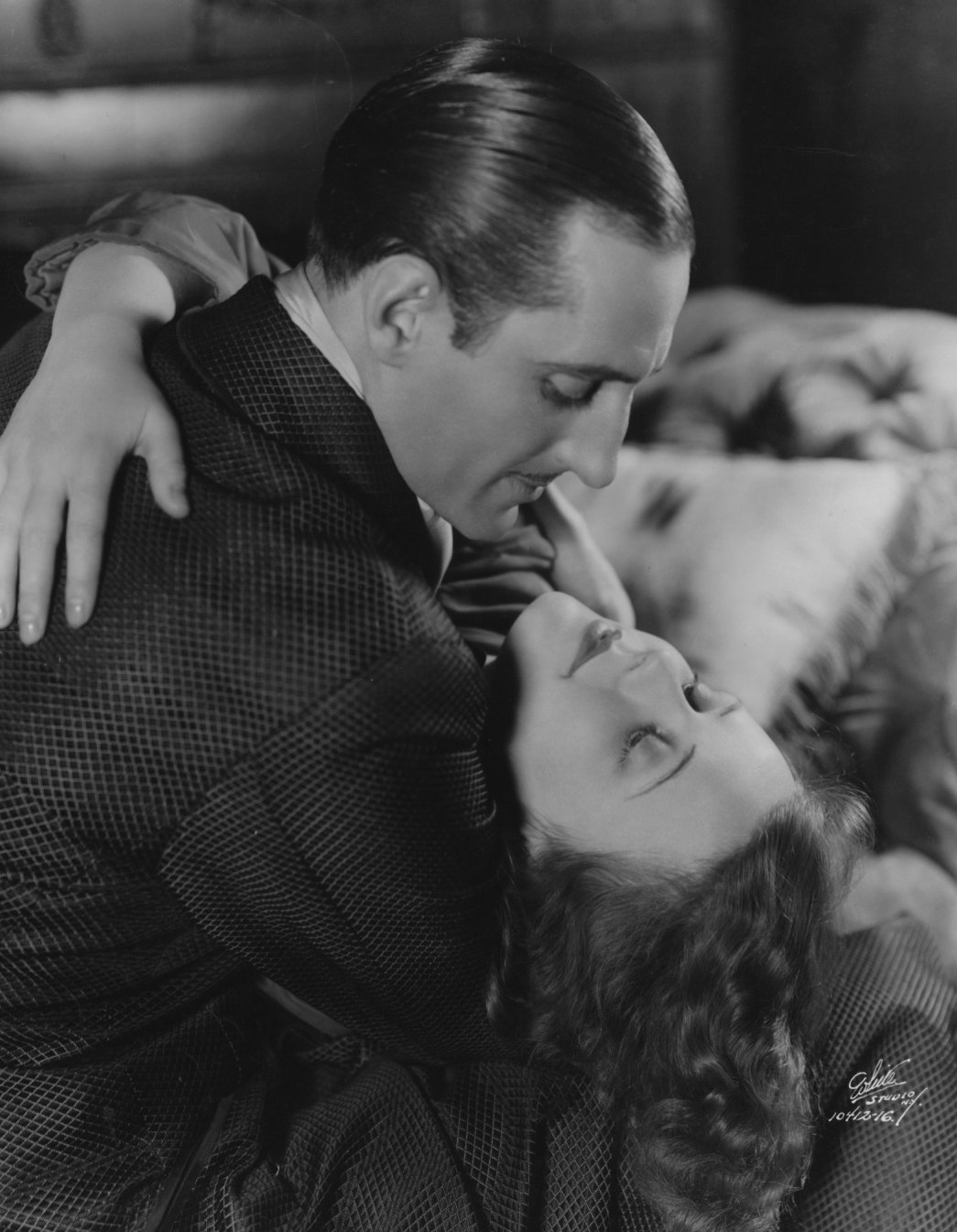 Basil Rathbone and Edna Best photo by White Studio |
