|




















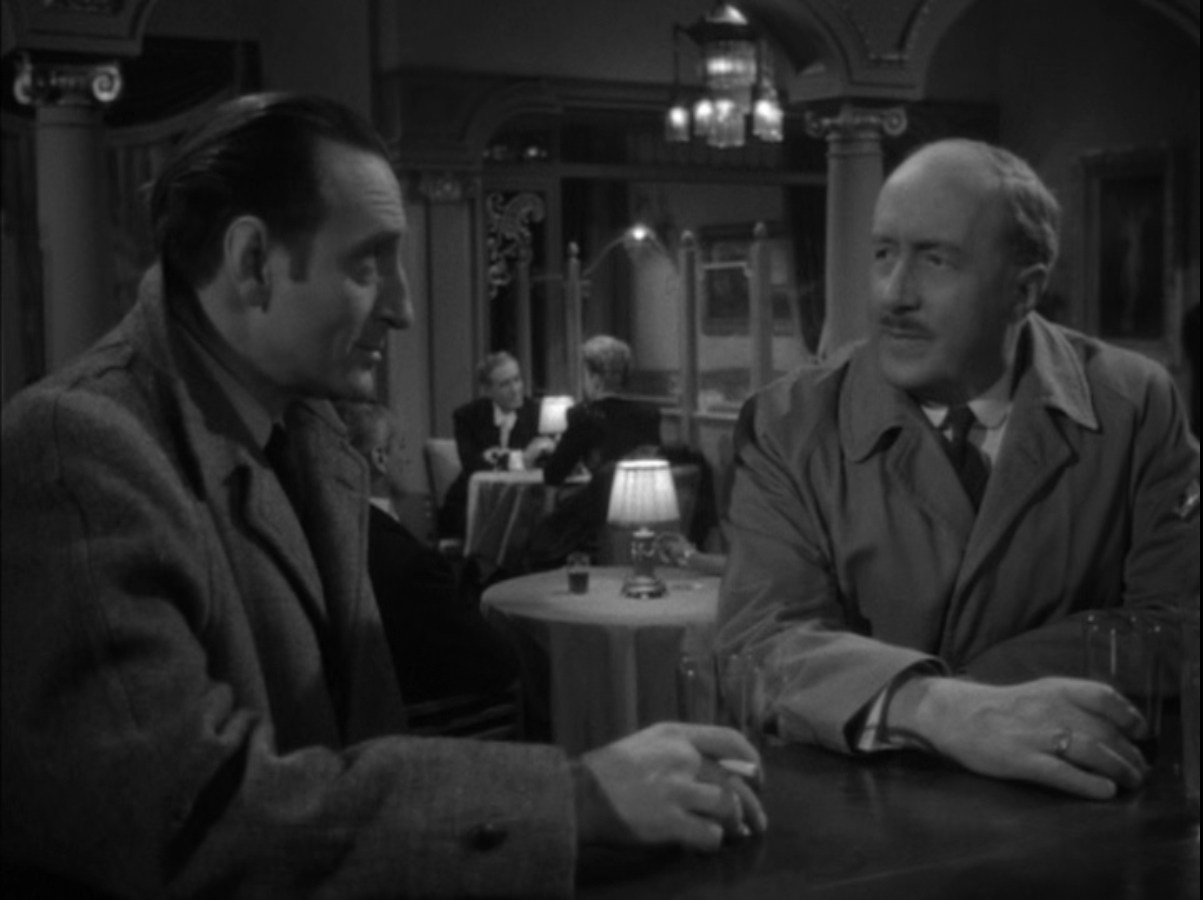
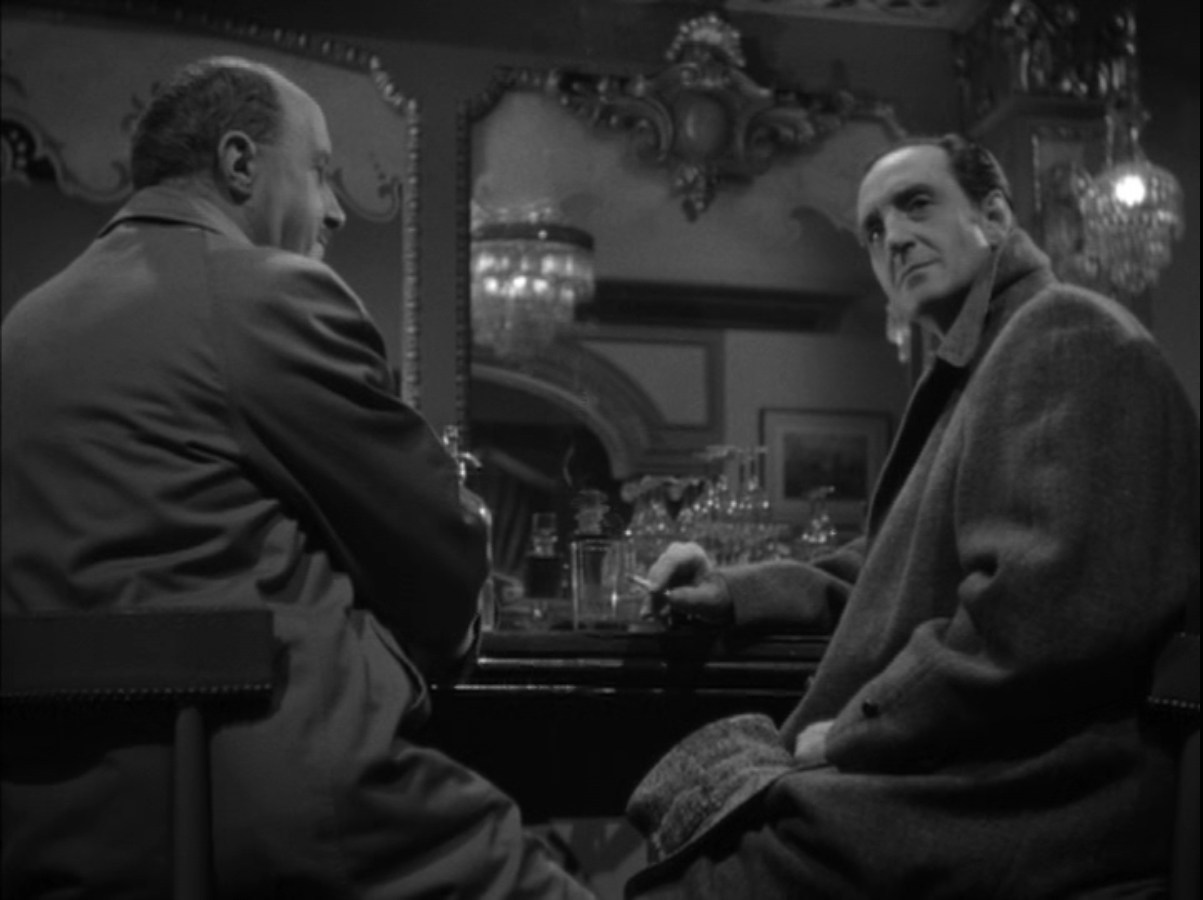
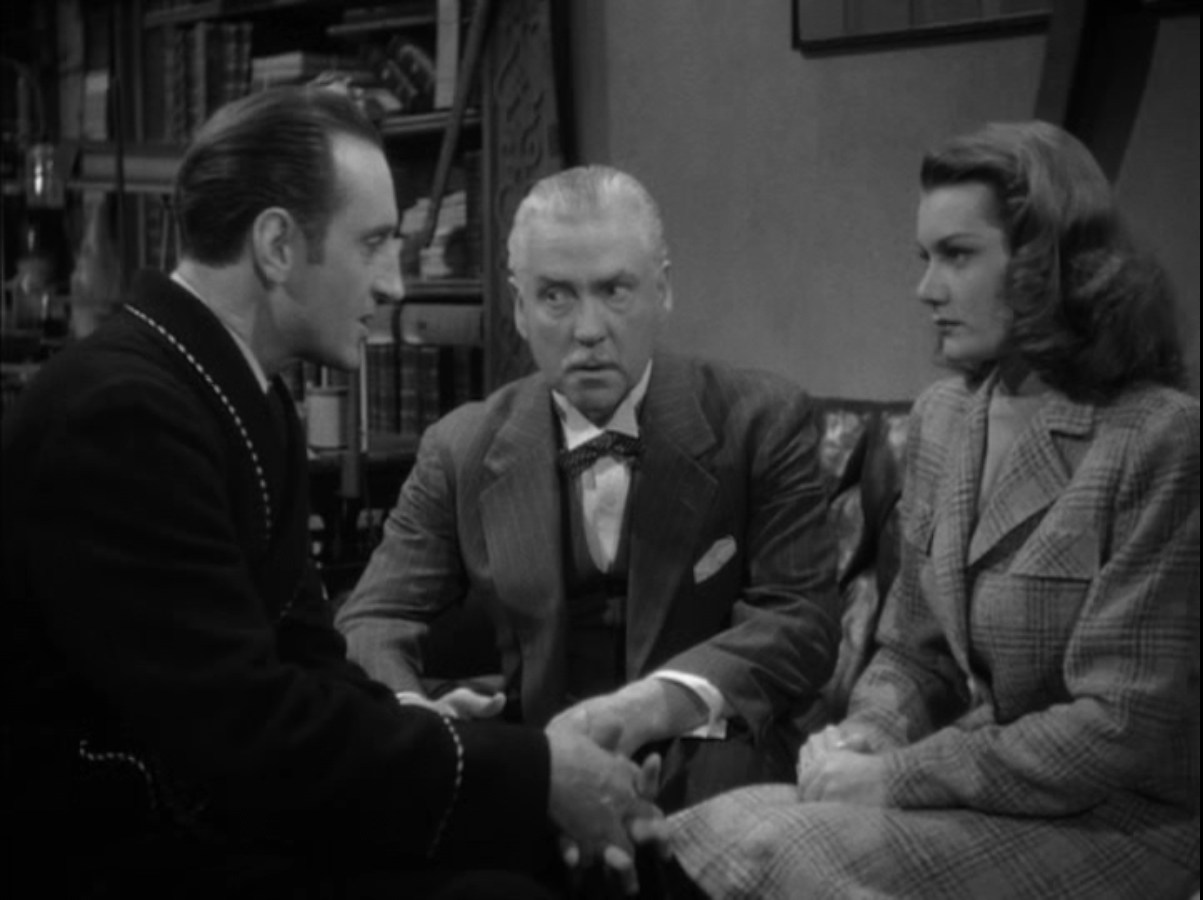
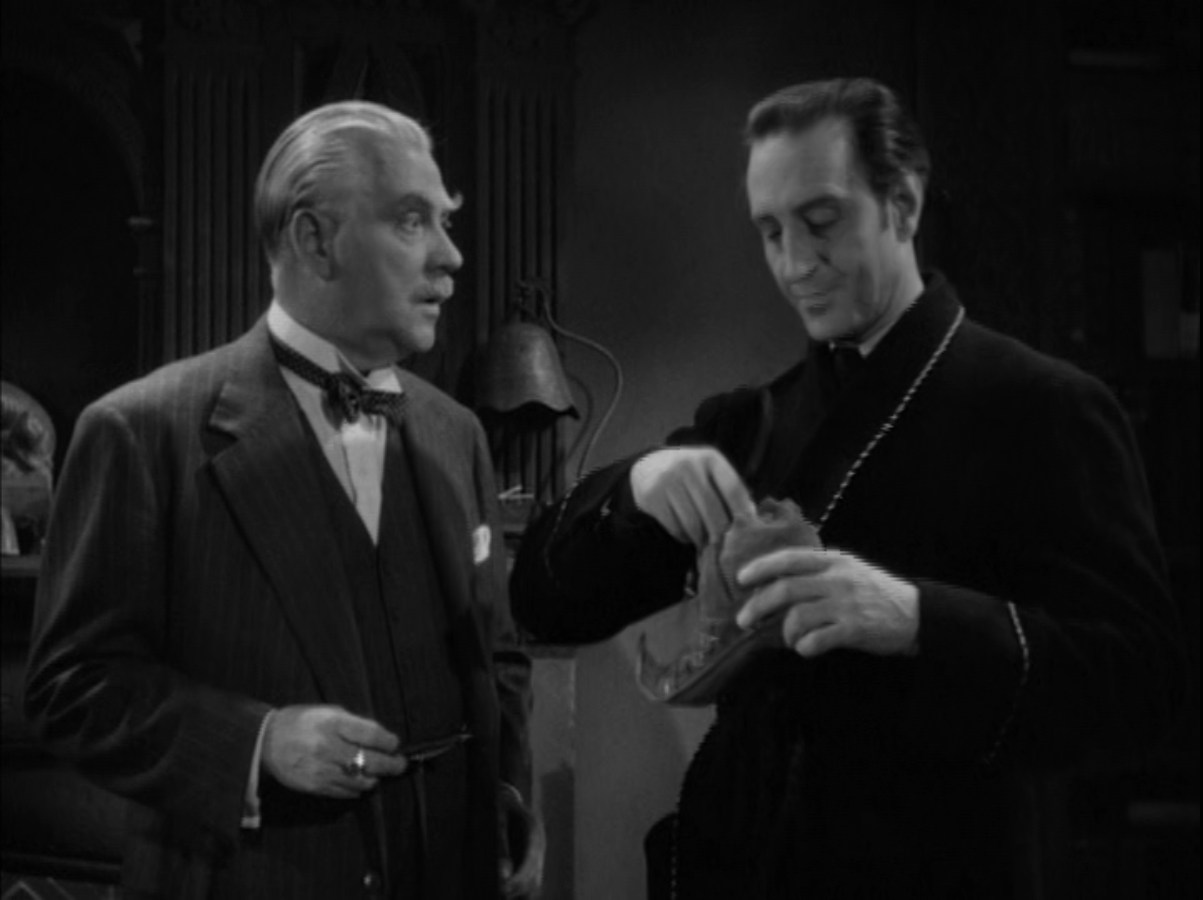
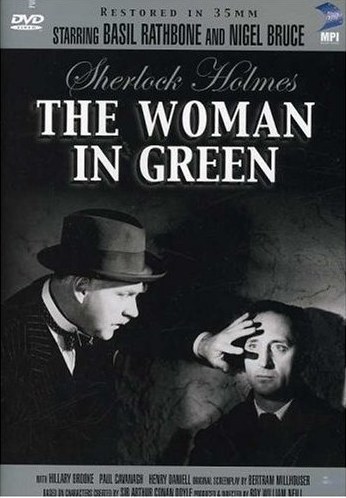
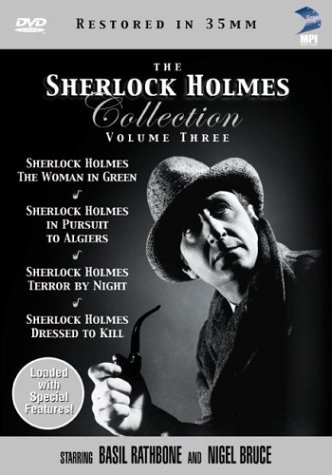
The Woman in Green(1945) 68 min. b&wThe Woman in Green is the eleventh Sherlock Holmes film that Basil Rathbone and Nigel Bruce made together (ninth in the Universal series). Hypnosis and blackmail are involved in this tale, which opens with Inspector Gregson of the CID narrating. Four defenseless women have been found murdered, and in each case the right forefinger has been cleanly severed. Scotland Yard has no clues or leads, and is under great pressure to solve the case, so Gregson calls on Sherlock Holmes for help. Gregson and Holmes discuss the case over a whiskey and soda at Pembroke House, where they also observe Sir George Fenwick sitting with an attractive young woman. The inspector comments, "Is that his daughter with him?" and Holmes replies, "Don't be so naive, Inspector." A little while later they observe Sir George and the young woman leaving together. Holmes comments, "Wonder where she's taking Sir George Fenwick." To which the inspector replies, "Don't be so naive, Mr. Holmes."
The following morning Sir George wakes up in a room over Edgeware Road, having no memory of how he got there, and we hear a newspaper boy calling out the news of a horrible murder in Edgeware Road. As Sir George reaches into his coat pocket, he discovers a severed finger in it. He returns to the woman's home to try to figure out what happened, and Moriarty confronts Sir George, claiming to have seen him commit the murder. Sir George's daughter comes to Holmes after observing her father bury the finger in the garden. Holmes, Watson and Gregson arrive at Sir George's house too late to save him. He's been shot. After Sir George is murdered Holmes finds enough clues to figure out that blackmail was the motive for the finger murders, but he remains baffled as to how the people are convinced they committed a murder.
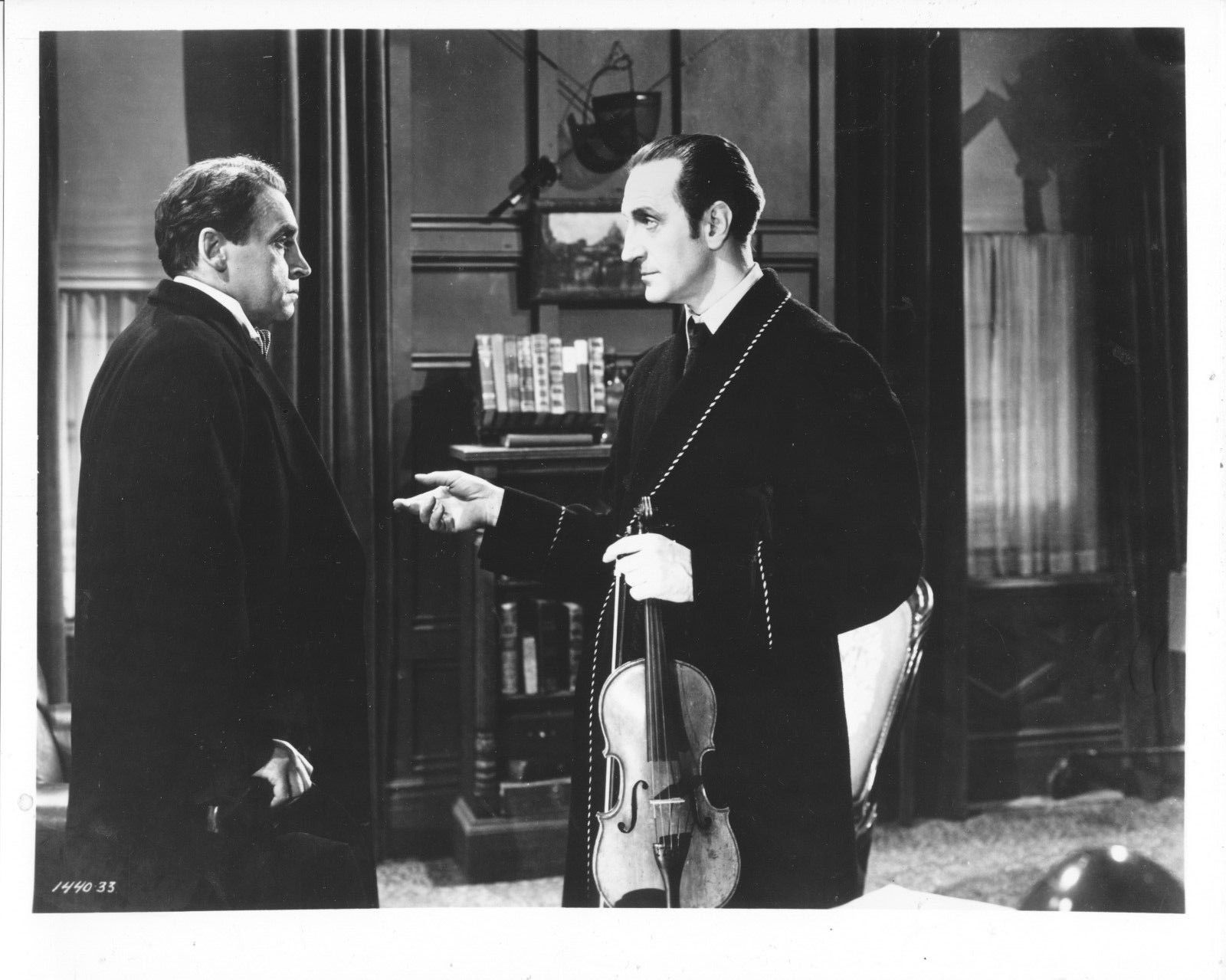
Watson is lured away from Baker Street by a phone call, a fake medical emergency. As soon as he's gone, Moriarty pays a visit to Holmes. The ensuing dialogue is largely inspired by Arthur Conan Doyle's "The Final Problem."
Compare the above passage with the actual dialogue from the film below:
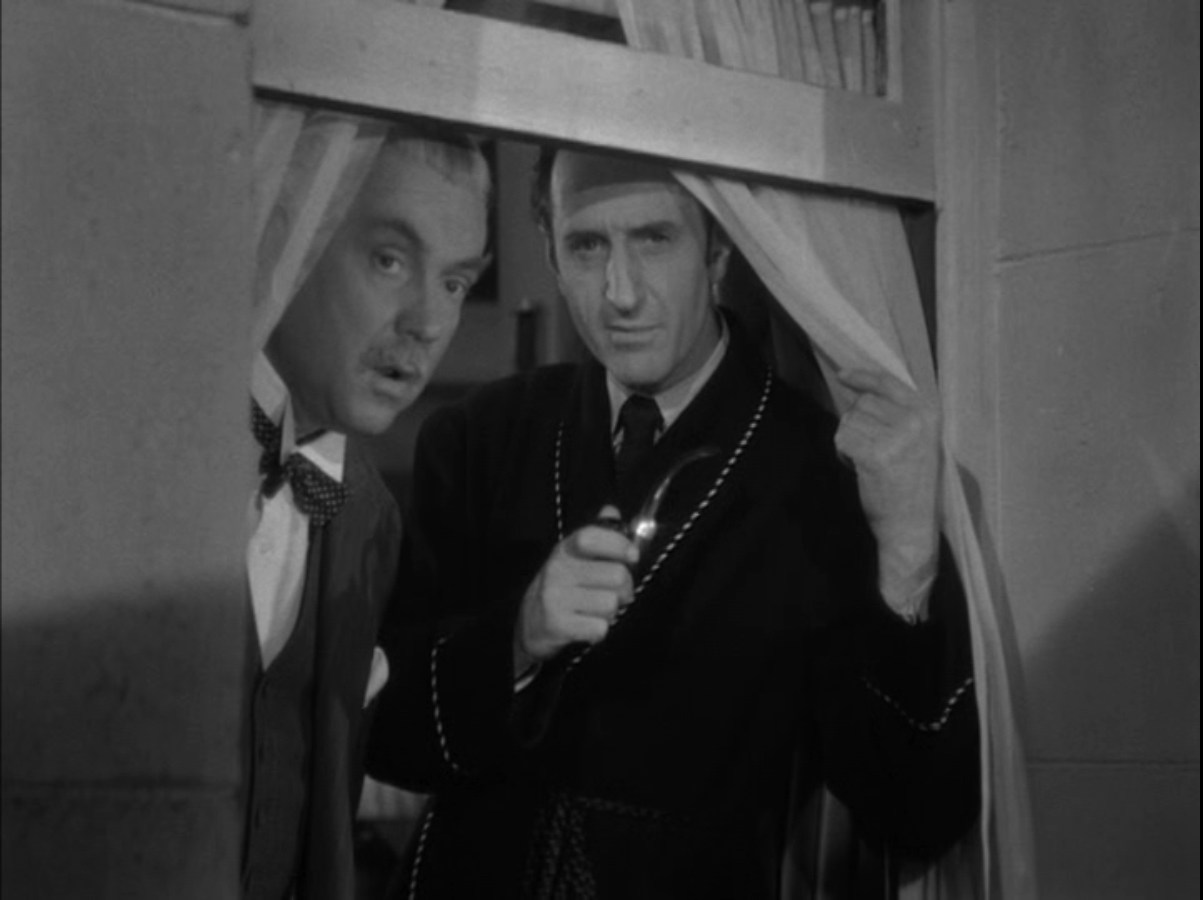
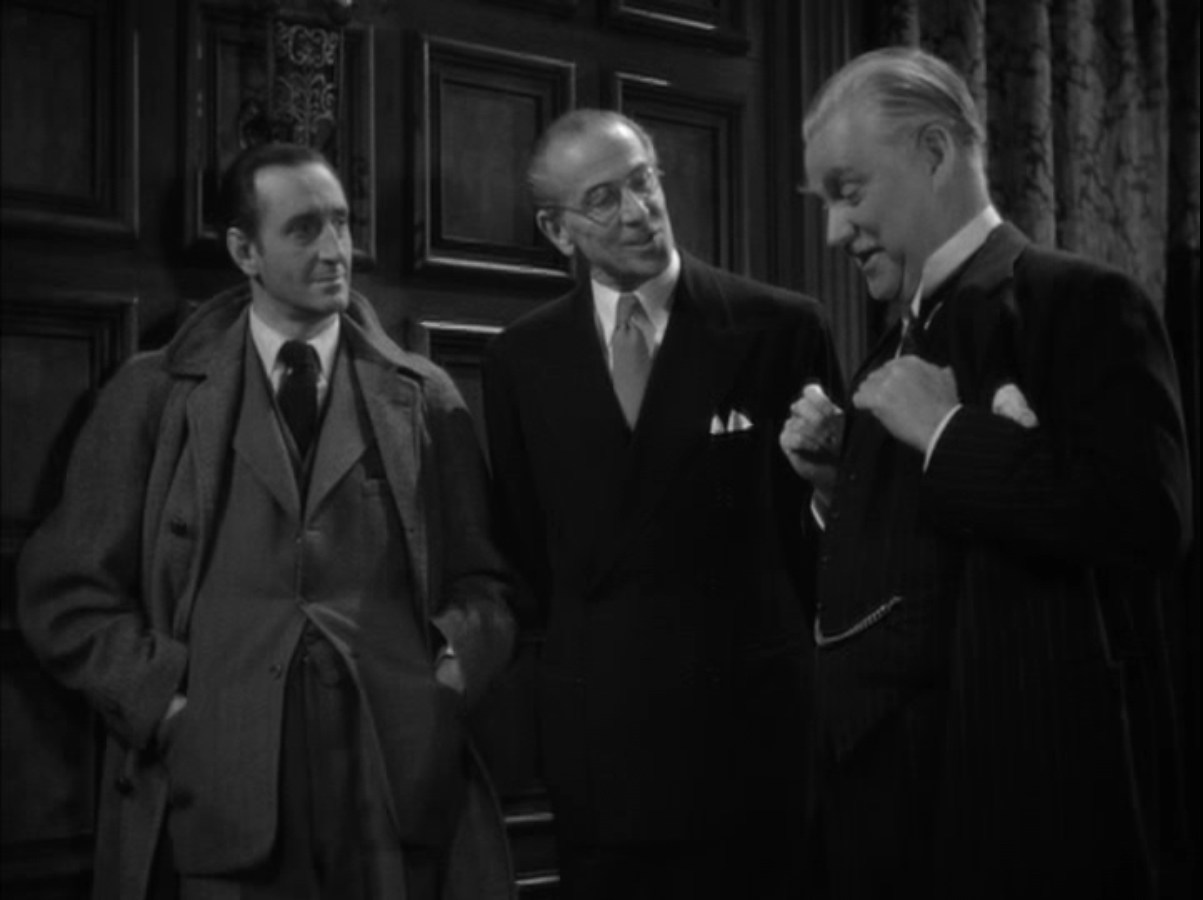
Moriarty claims that his men will kill Dr. Watson if he, Moriarty, fails to return unharmed. As they talk, Moriarty nudges Holme's chair closer to the window. After Moriarty leaves, and Watson returns, Holmes notices an open window in the empty house across the street. He asks Watson to go check it out. From the house across the street Watson can see the silhouette of Holmes through the window. He also sees a man with a rifle approach the window and aim. Before Watson can stop him, the man shoots. Fortunately, he shoots a bust of Julius Caesar, and Holmes is right behind Watson. They capture the sniper and discover that he is hypnotized. Suddenly Holmes realizes the method used in the finger murders: the victims are hypnotized and therefore easily led to believe they might have committed the murder. Holmes and Watson pay a visit to the Mesmer Club, the meeting place for the top hypnotists. Sherlock Holmes' brother Mycroft is a valued member of the club.
At the Mesmer Club Holmes spots the "Woman in Green," whom he saw with Sir George, and learns her name is Lydia. Holmes accompanies Lydia to Pembroke House, where Holmes confesses that he is losing sleep over the difficult case of the Finger Murders. Claiming that she can help him with his insomnia, Lydia coaxes Holmes to her apartment and there hypnotizes Holmes. Moriarty then enters the room and orders Holmes to write a suicide note and then walk out onto the ledge of the balcony. Before Holmes reaches the end of the ledge, Watson arrives with the police, and they arrest everyone involved with the finger murders. Watson jumps to the ledge to save Holmes and discovers that he isn't hypnotized at all. He was just playing along until the police could get there. Moriarty breaks free from his captors and jumps to the ledge of the next building. But because he is handcuffed, he is unable to grab hold of anything and he falls to his death.
This film presents two adversaries for Holmes: the "Napoleon of crime" Moriarty and a seductive femme fatale. Oddly enough, audiences never questioned how Moriarty could be alive after apparently being killed in both The Adventures of Sherlock Holmes and Sherlock Holmes and the Secret Weapon. Many fans and critics believe George Zucco's Moriarty (The Adventures of Sherlock Holmes) was the best, but Rathbone thought Daniell's interpretation of Moriarty was "delectably dangerous" and "masterly." Henry Daniell's performance was indeed superb, and the highlight of the film. The character of Moriarty didn't appear in any more Holmes films until 1976, in The Seven Percent Solution. Hillary Brooke, the seductive femme fatale, appeared in two other Sherlock Holmes films in the Rathbone/Bruce series. She was the driver, Jill, in Sherlock Holmes and the Voice of Terror, as well as Sally Musgrave in Sherlock Holmes Faces Death. The working title of The Woman in Green was Invitation to Death. This was the last film of the series to be written by Bertram Millhauser. It used an idea in "The Adventure of the Empty House" but otherwise was an original story, not based on a Conan Doyle story. As gruesome as the murders of young women were, the murders described in the original script were even more gruesome. They involved the mutilation of young girls, ages eight or nine. The Production Code Administration (film censors) objected, and the script was changed to having the murder victims be adult women. Shooting began on January 12 and ended on February 5, 1945. The film opened in New York City on June 15, 1945, and the rest of the USA on July 15, 1945. "Basil was constantly fooling around on the set. We had a scene in the
picture where the two of us were in a cocktail lounge. For some reason,
the sequence was taking a long time to shoot, so, to break the monotony,
we pretended we were getting drunk ... slurring our speech and the like
... with the scene ending by both of us sliding under the table and
passing out." —Hillary Brooke, quoted
in Starring Sherlock Holmes, by David Stuart Davies Go to Page Two for more photos and reviews, and Page Three for pictures of posters, lobby cards, and promo photos for The Woman in Green. .
..
Note: The Woman in Green is one of the four Sherlock Holmes films that is in the public domain. That means that anyone can legally produce and sell a DVD of this film. Consequently, it's easy to find cheap DVDs of The Woman in Green. But these cheap ones are also cheap quality. The links above are for the digitally remastered, high-quality DVDs produced by MPI Home Video. Don't waste your money on anything else!
|