|




















The
Bishop Murder Case
|
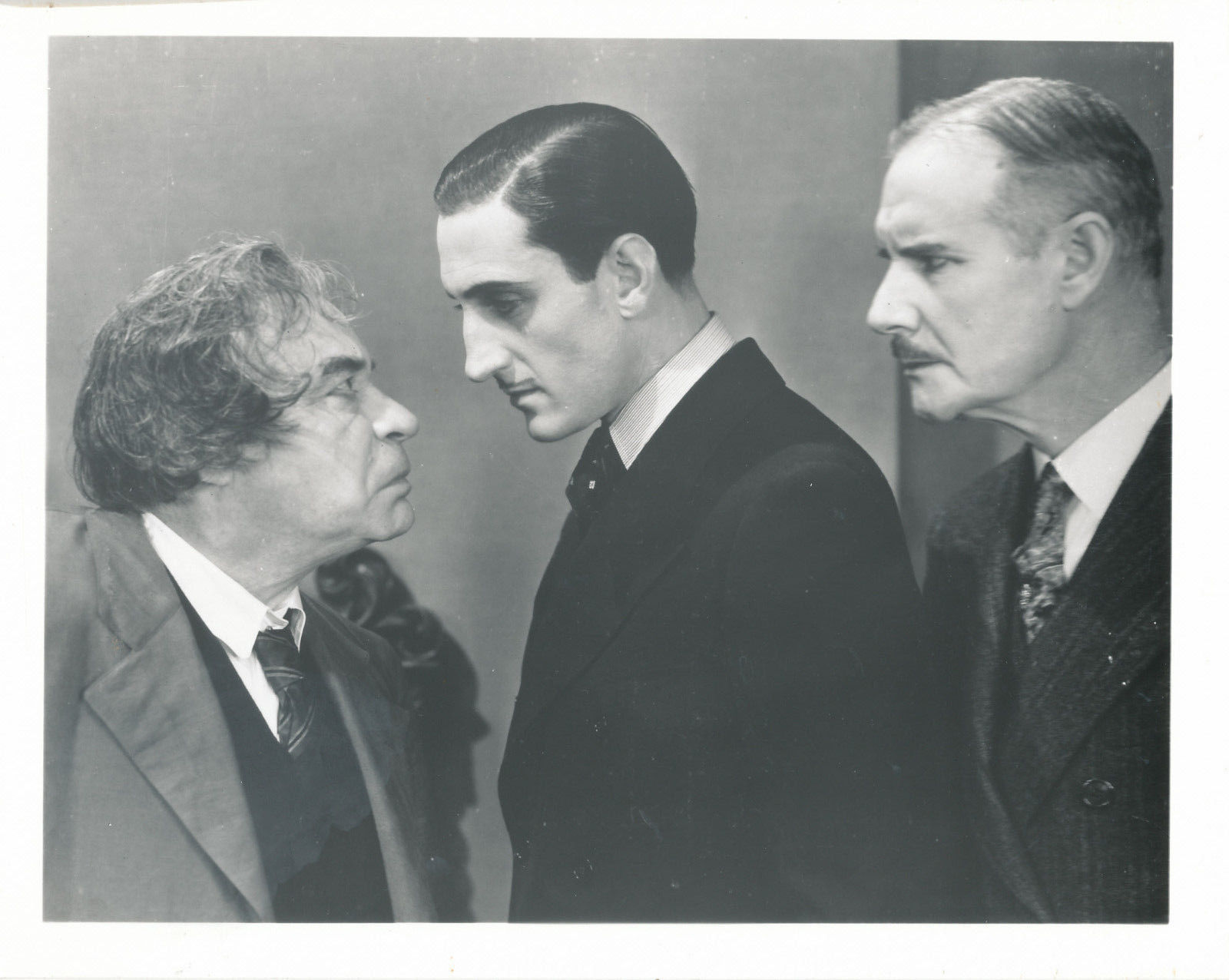
| Basil Rathbone stars as gentleman detective Philo Vance in this murder mystery. The story begins with the discovery of the body of a young man, Joseph Cochran Robin. The victim, who goes by the nickname "Cock Robin," has apparently been shot through the heart by an arrow. District Attorney Markham calls his friend Philo Vance, a cultured eccentric, to assist the investigation. Vance, Markham and Detective Heath interview all the people who knew Robin or may have seen something that morning: Professor Dillard, his niece Belle, Prof. Arnesson, Mr. Sperling, Adolph Drukker and his sister, Mr. Pardee and the servants in the Dillard house. The chief suspect is Mr. Sperling, largely because of a note that was left for the police and sent to the newspapers: |
|
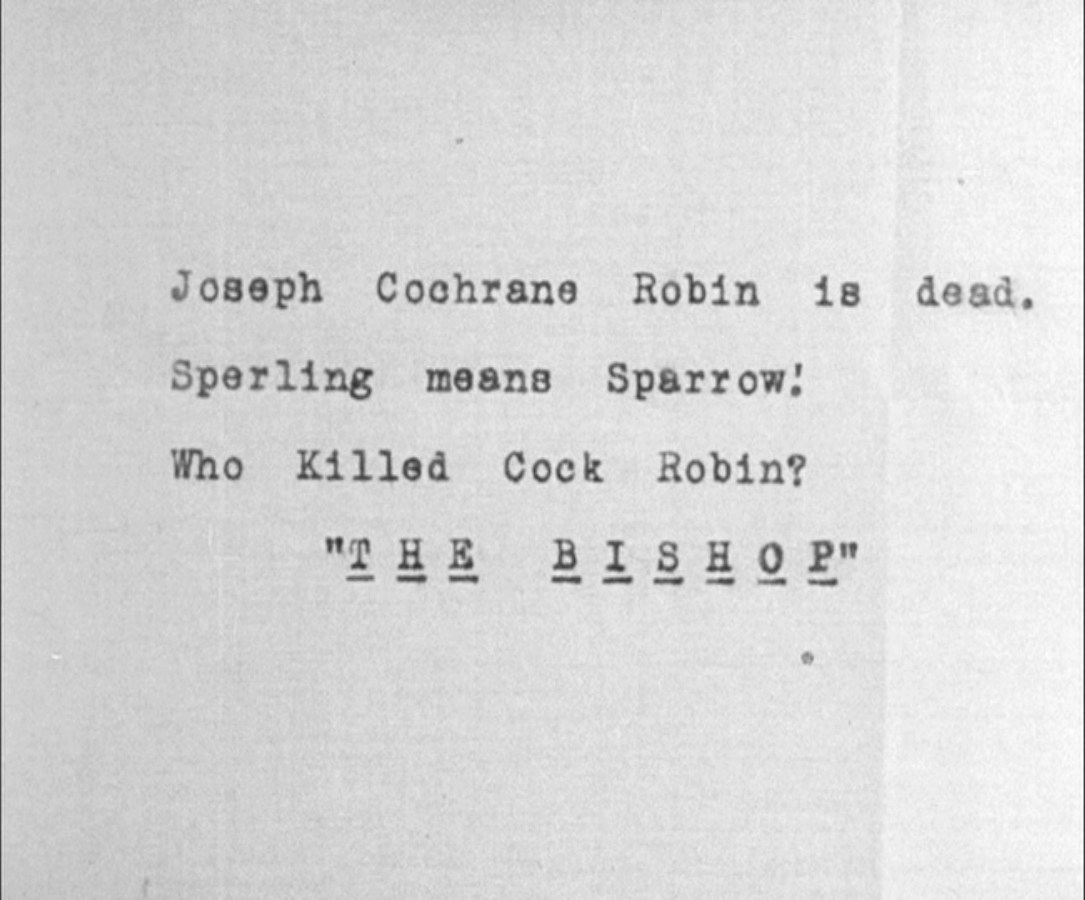
Vance recalls the nursery rhyme:
| Who killed Cock Robin? "I," said the sparrow, "With my bow and arrow. I killed Cock Robin." |
Sperling is arrested, and Detective Heath believes the case is solved. Vance, however, believes that the easy, obvious solution cannot be the right one. He explains, "This is no ordinary crime. And we cannot proceed in an ordinary manner. Mark my words: this is not a single murder we are trying to solve; it is the beginning of a series of murders, ghastly and inhuman."
The next victim is Johnny Sprigg, who is shot with a little gun through the top of his head. This murder was also based on a nursery rhyme. Since Sperling was in custody at the time of the second murder, suspicion falls on everyone else. There are plenty of red herrings in this story, and when the real killer is finally revealed, it's a surprise, and also pretty unbelievable.
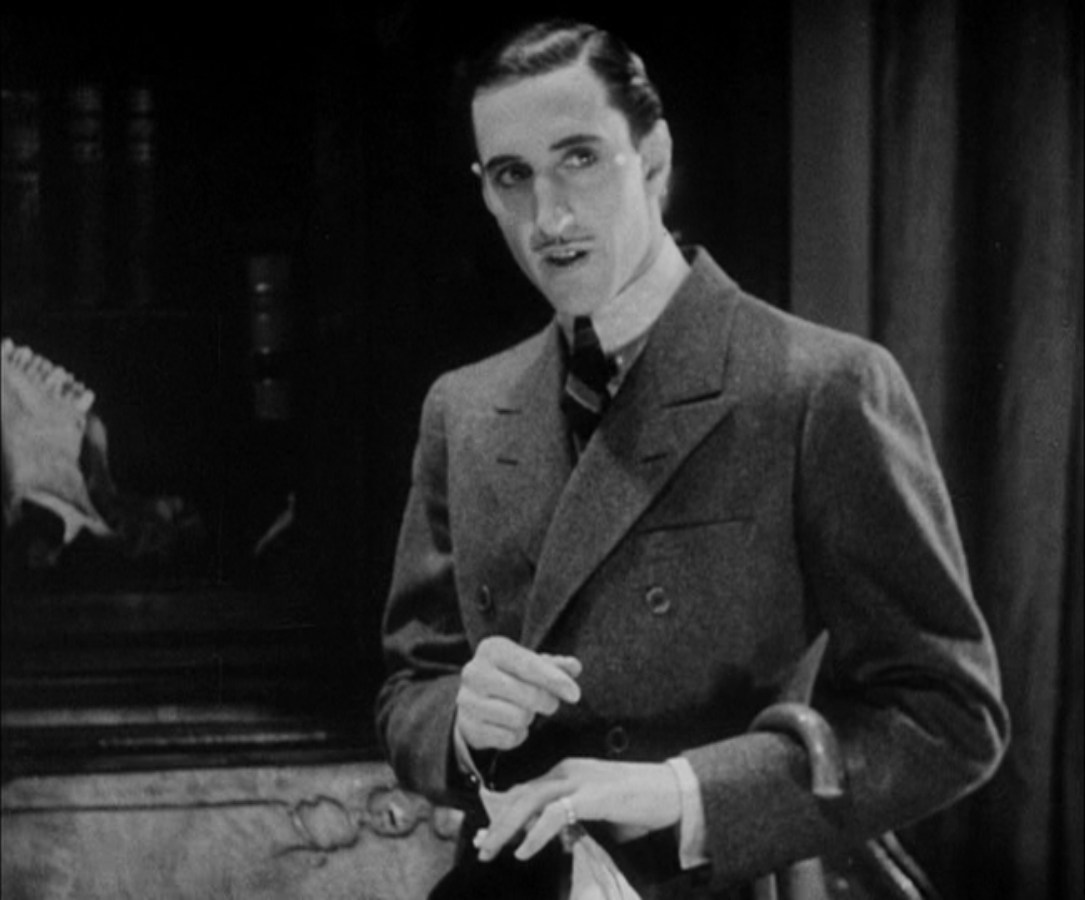 Rathbone as Vance: handsome, clever |
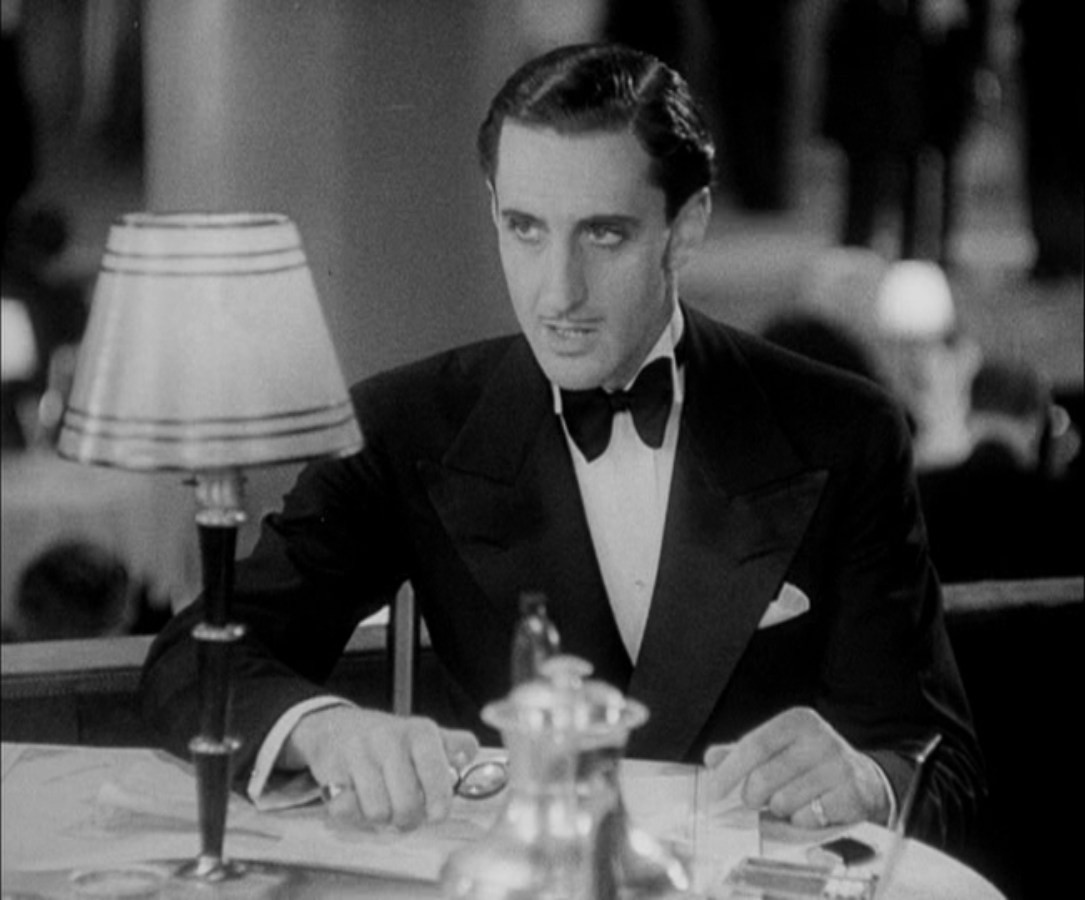 Rathbone as Vance: suave, debonair |
S.S. Van Dine wrote a number of murder mystery novels and created the character of detective Philo Vance. The Bishop Murder Case was published in 1929 and is one of the best Vance novels. This film is a close adaptation of the novel, with only a few minor variations. Philo Vance has been described as pompous, nonchalant, whimsical, and affectatious—a young aristocrat "who constantly injects his knowledge of the most esoteric subjects, particularly those relating to art, music, religion, and philosophy, into murder investigations."1 His good friend, District Attorney Markham, frequently asks Vance to help solve murder cases. Vance agrees to do this purely as an intellectual exercise. Rathbone's Philo Vance did not come off as snobbish or pompous. And he gave no long-winded lectures to show off how much he knew. He was suave, debonair, polite, and very clever.
The Bishop Murder Case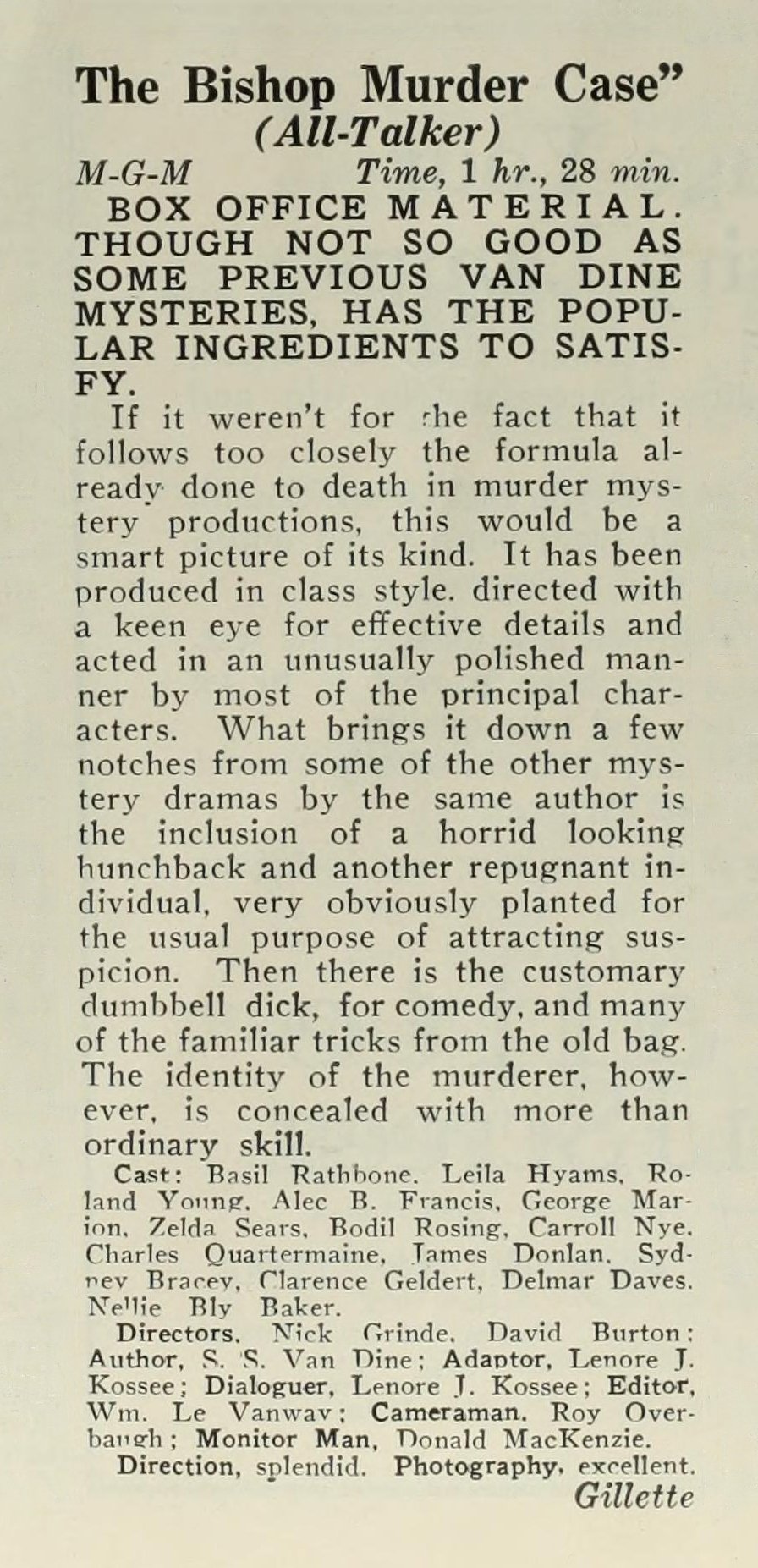 BOX OFFICE MATERIAL. THOUGH NOT SO GOOD AS SOME PREVIOUS VAN DINE MYSTERIES, HAS THE POPULAR INGREDIENTS TO SATISFY. If it weren't for the fact that it follows too closely the formula already done to death in murder mystery productions, this would be a smart picture of its kind. It has been produced in class style, directed with a keen eye for effective details and acted in an unusually polished manner by most of the principal characters. What brings it down a few notches from some of the other mystery dramas by the same author is the inclusion of a horrid looking hunchback and another repugnant individual, very obviously planted for the usual purpose of attracting suspicion. Then there is the customary dumbbell dick, for comedy, and many of the familiar tricks from the old bag. The identity of the murderer, however, is concealed with more than ordinary skill. Gillette —The Film Daily, February 2, 1930 |
The Encyclopedia of Mystery and Detection states that Philo Vance bears many similarities to Ellery Queen and Lord Peter Wimsey, but makes no comparison to Sherlock Holmes. Perhaps it was just this film, or the fact that Rathbone (so identified with Holmes) was playing Vance, but it seemed that Vance analyzed clues in a very logical, "Sherlockian" manner. Although in the book there are no references to Sherlock Holmes, in the film there are several mentions of Holmes. Arnesson, one of the characters, even refers to Vance and District Attorney Markham as "Sherlock Holmes and Dr. Watson." The character of Vance (as portrayed by Rathbone) bears some similarities to Sherlock Holmes. When the police sergeant (as much of an idiot as Lestrade) complained about Vance's theories and said, "Give me facts," Vance pointed out that just by looking at the sergeant he could tell that the sergeant had taken a young lady out to dinner that evening, that he didn't have enough money to pay the bill, that when he told her that he had to leave to meet with Vance and Markham, the young lady became tearful, and that he promised to join her later. The sergeant (and Markham) were amazed. Vance explained: "It's all quite simple, Markham, really. I can see that tonight he took a lady out to dinner because he shaved just this afternoon. (speaking to the sergeant) You didn't have enough money to pay the bill and wrote a check to cover it because there is an ink stain on your finger, and you are otherwise immaculate. I know the young lady became tearful and you wiped away her tears because there is a smudge of mascara on your handkerchief. You promised to join her later, because you've been looking at your watch ever since you arrived."
Holmes couldn't have done better!
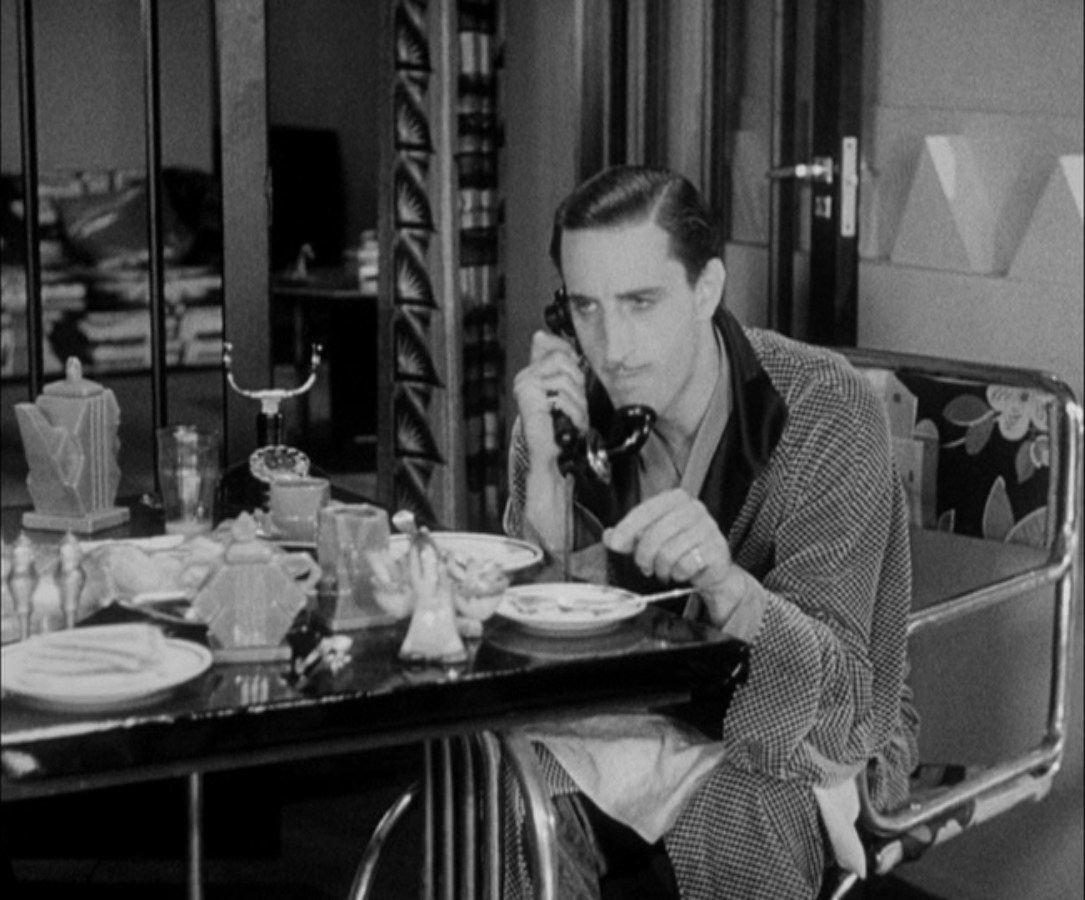 Vance receives the call from Markham. |
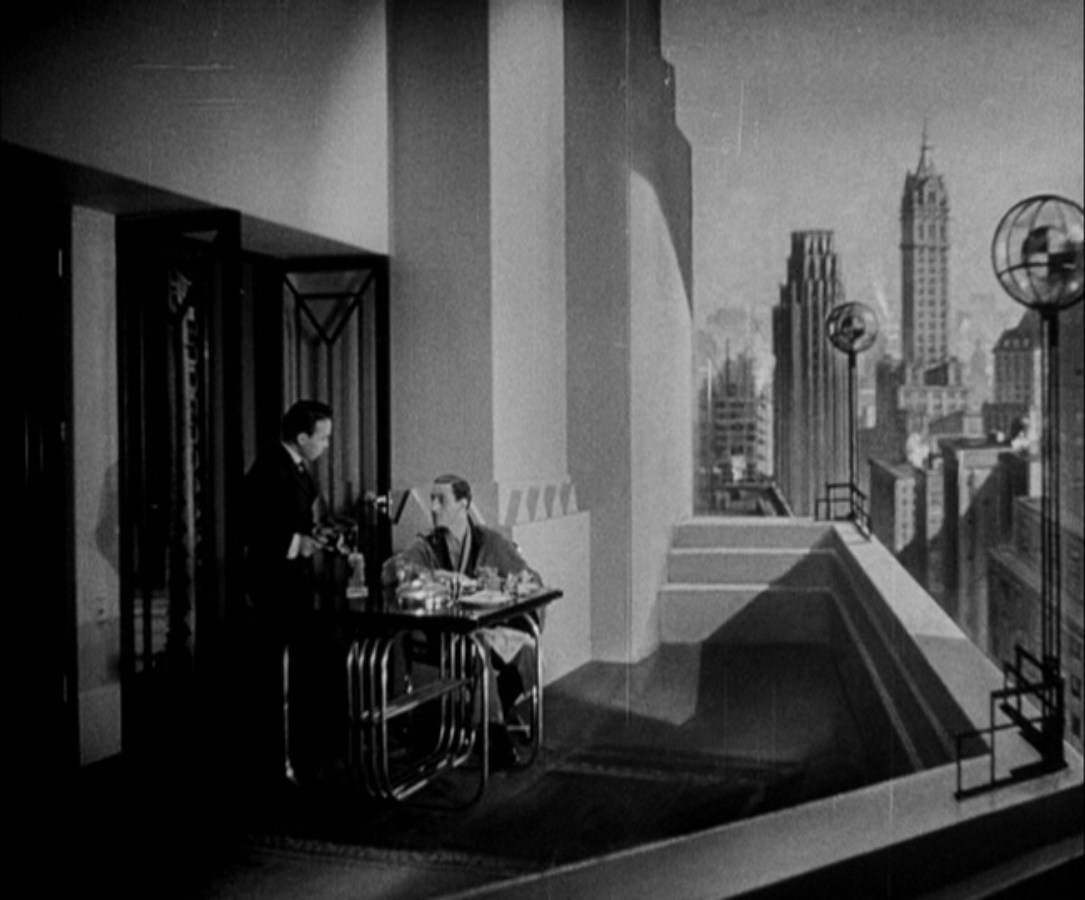 A view of the Manhattan skyline from Vance's balcony |
The film was a decent mystery story. With the exceptions of Basil Rathbone and Clarence Geldart (District Attorney Markham), most of the actors seemed to be overacting, "hamming" it up. Such exaggerated expressions and overacting may have been typical of early talkies, because the actors were trained in silent pictures where emotions were portrayed by gestures and looks rather than words. The lack of mood music was very noticeable. When there was no dialogue, there was silence.
An interesting difference between the book and the film concerns the character of Van Dine. The author of the book, whose real name was Willard Huntington Wright, used the pseudonym of S.S. Van Dine, and created himself as a character who serves as the narrator of the stories and Philo Vance's closest friend. Unlike Dr. Watson of the Sherlock Holmes stories, "Van" doesn't speak or interact with the other characters; he's not even introduced to other characters. Van's only purpose is to serve as an observer so that he may later write down an account of the story. It's no wonder, then, that his character doesn't appear in the film.
Another difference between book and film concerns the characters of the Drukkers. In the book "Lady Mae" Drukker and Adolph are mother and son; in the film they are sister and brother. Otherwise, they are exactly as in the book, so the reason for this change is a mystery. Also, Arnesson's first name inexplicably was changed from Sigurd (in the book) to Erik (in the film). His name appears as Sigurd in the credits, but none of the characters called him by that name. Belle Dillard and her father both called him "Erik."
The Bishop Murder Case An excellent murder mystery melodrama, in which the spectator is held in breathless suspense almost all the way through. It is the sort of melodrama Paramount has been producing lately, with William Powell as the scientific investigator of crimes. Such a role is given in this picture to Mr. Basil Rathbone, who handles it extremely well. As is usual in pictures of this sort, there is the simple-minded detective, who does not believe in deductions, which the scientific investigator relies on, but wants to proceed, guided only by what he had observed, to arrest persons he thinks guilty. It is the kind of part usually given to Eugene Pallette. In this picture, the part is given to James Donlan. He provokes no little comedy when he attempts to get credit for the discovery of clues by Mr. Rathbone. The plot has been constructed well, with the result that one does not know who the murderer is, until the last scenes. All through the picture one is led to believe that the murderer is other than the real one. His suspicions are made to fall on almost every one of the characters. It is finally revealed that the murder is the heroine's uncle (Alec B. Francis), a doctor, whose mind had become somewhat unbalanced. He is shown as having murdered one young man, and in order to hide his crime he had to commit other murders, until finally he is caught. He dies from fright: He had put poison in one of the wine glasses, which he intended to fill with wine and to hand it to one of the characters. The scientist, however, had seen him put in the poison and changed the glasses. When the mentally unbalanced doctor was about to drink along with the others, the detective informs him that he had seen him put poison in one of the glasses and had changed it, and made him believe that the glass from which he had drunk the wine was the one that contained the poison. He thinks he had poisoned himself and dies, confessing to the murders before his death. —Harrison's Reports, February 8, 1930 |
Paramount released two earlier Philo Vance films in 1929: The Canary Murder Case and The Greene Murder Case. Both films starred William Powell as Philo Vance, and were successful at the box office. MGM had acquired the rights to The Bishop Murder Case but was unable to borrow William Powell from Paramount to play Vance. As a result, MGM cast Basil Rathbone as the detective. Rathbone was under contract to MGM at the time, and earning $2500 per week.
Two directors worked together to make The Bishop Murder Case; Nick Grinde (screen director) handled the picture sequences, with David Burton (stage director) in charge of dialog. Originally, Bertram Harrison was to be the stage director, but he was later replaced by David Burton.
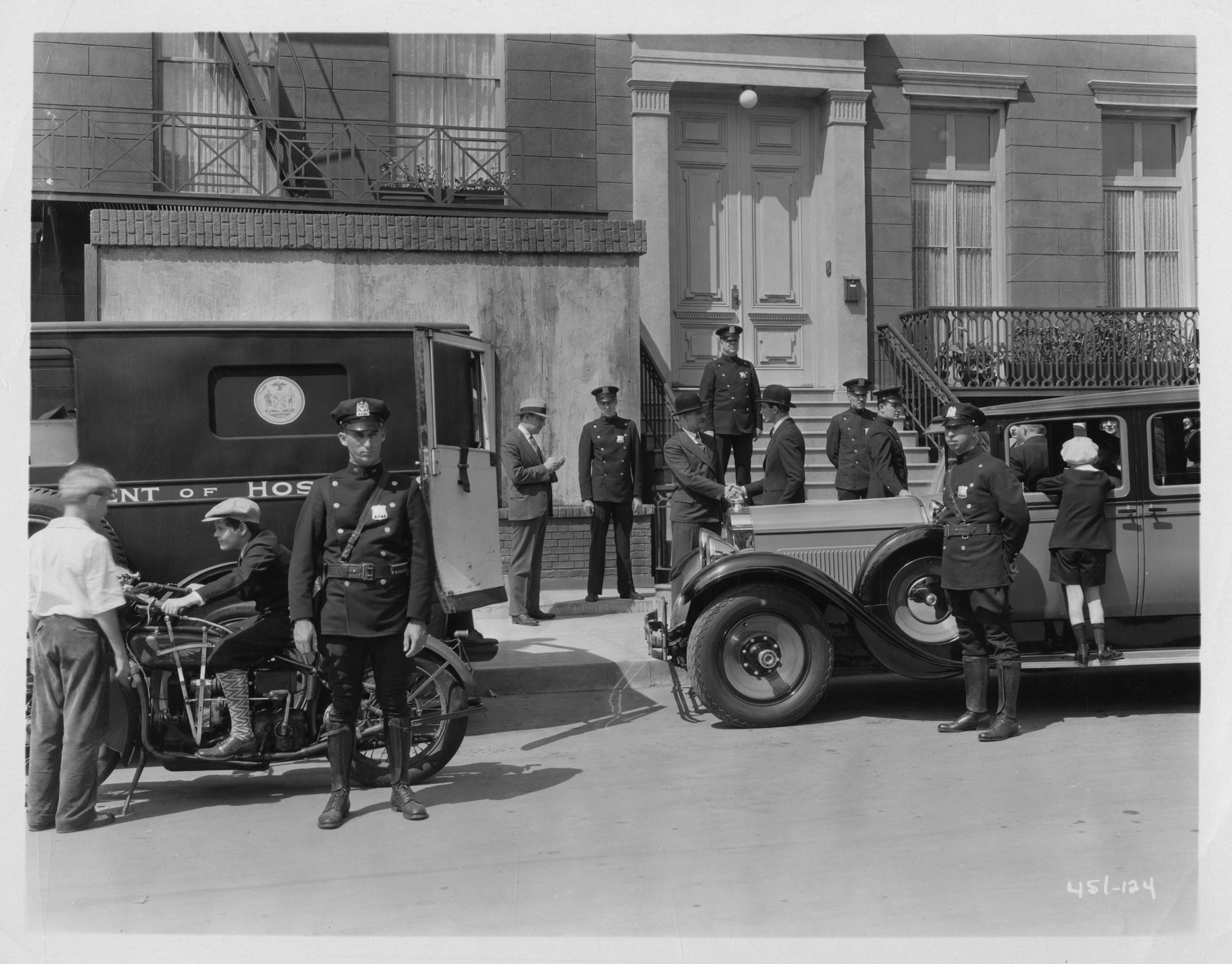 Vance and Markham arrive at the Dillard house. |
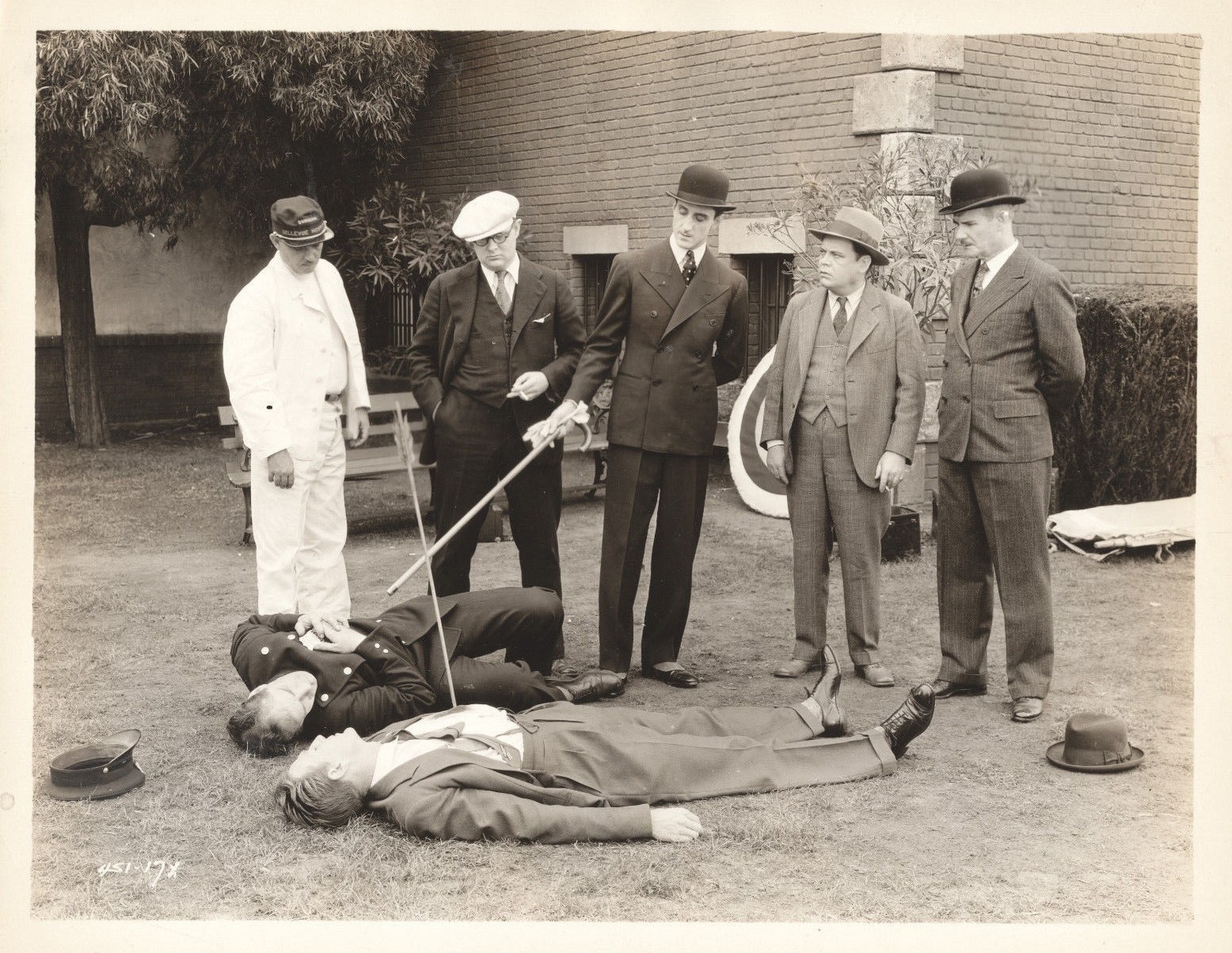 Vance uses the policeman to demonstrate the way a person who was shot with an arrow would fall. |
Completed in December 1929, the film premiered in San Antonio, Texas on December 31. It was released nationally on January 3, 1930.
Variety reported that the box office receipts for The Bishop Murder Case were "pretty good"—neither a hit nor a flop. In fact, ticket sales were excellent when the film was first released, but dropped off when moviegoers learned that William Powell was not Philo Vance. "Many squawks by the fans about this. Basil Rathbone okay in the part, but Powell had established the amateur detective on the screen." (Variety, February 5, 1930)
The Bishop Murder Case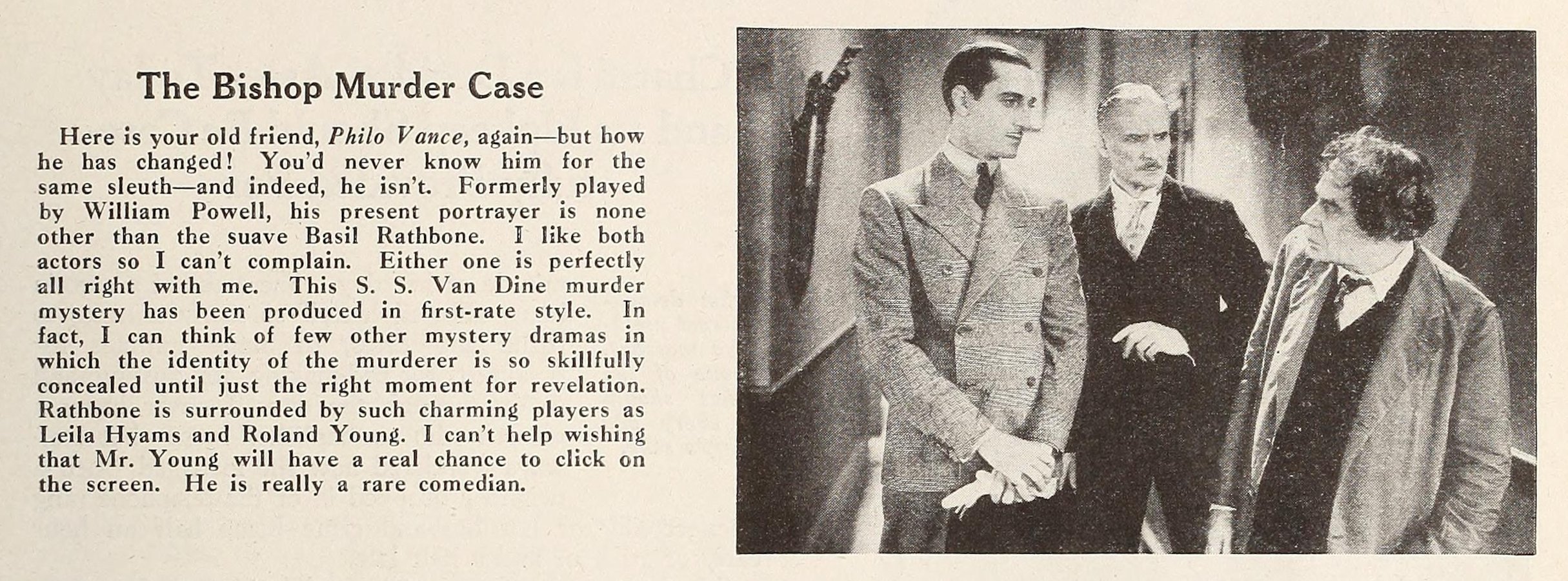 Here is your old friend, Philo Vance, again—but how he has changed! You'd never know him for the same sleuth—and indeed, he isn't. Formerly played by William Powell, his present portrayer is none other than the suave Basil Rathbone. I like both actors so I can't complain. Either one is perfectly all right with me. This S.S. Van Dine murder mystery has been produced in first-rate style. In fact, I can think of few other mystery dramas in which the identity of the murderer is so skillfully concealed until just the right moment for revelation. Rathbone is surrounded by such charming players as Leila Hyams and Roland Young. I can't help wishing that Mr. Young will have a real chance to click on the screen. He is really a rare comedian. —Screenland, April 1930 |
In spite of the disappointment over seeing Rathbone in the role of Vance instead of Powell, audiences seemed to like the film. Some theater owners complained about the complexity of the plot and how fast the cast spoke:
- "Rathbone talks too fast just as he did in The Last of Mrs. Cheney."
- "I don't know what to say about this picture. I watched it for three nights and I don't know what it's about. Very hard to follow."
- "Good murder story and very interesting. The cast talks too fast, especially Young and Rathbone."
- "Our people seem to be fairly interested. Personally, I thought it was a poor picture. No clear line of development of the plot."
- "A good picture of its type, although the plot is hard to follow. The chap that took the part of the detective should slow down in his talking. He was hard to get and this is an important thing in this day of talking pictures."
- "One-half dozen murders and the crowd seemed to like it. Played to a good house and a mixed trade on a Saturday night. Good film recording."
- "The machine gun rapidity with which these actors speak mar what is possibly a very good mystery story."
- "Not so hot. The players do not talk plain. Two of them talk okay but the rest sound like they are just learning to speak. Don't come back with that old gag about equipment. We know our equipment is okay, for it delivers the goods on most of them if the talking is right. Why should it fall down on this one?"
- "An excellent mystery picture. As usual, all suspicions are cast on everyone but the murderer. Rathbone speaks a little too fast to be easily understood. Recording good."
- "A fairly good picture, but now I am reading the book and am finding out things I did not get clearly after watching the picture three times."
- "Good picture of the kind, but it didn't draw or please here. Rathbone and Roland Young were very hard to understand here."
- "Rathbone thinks so hard that you can hear his brain working and consequently he's not as effective as William Powell."
(Quotes from theater owners taken from issues of Exhibitor's Herald-World, February through July, 1930)
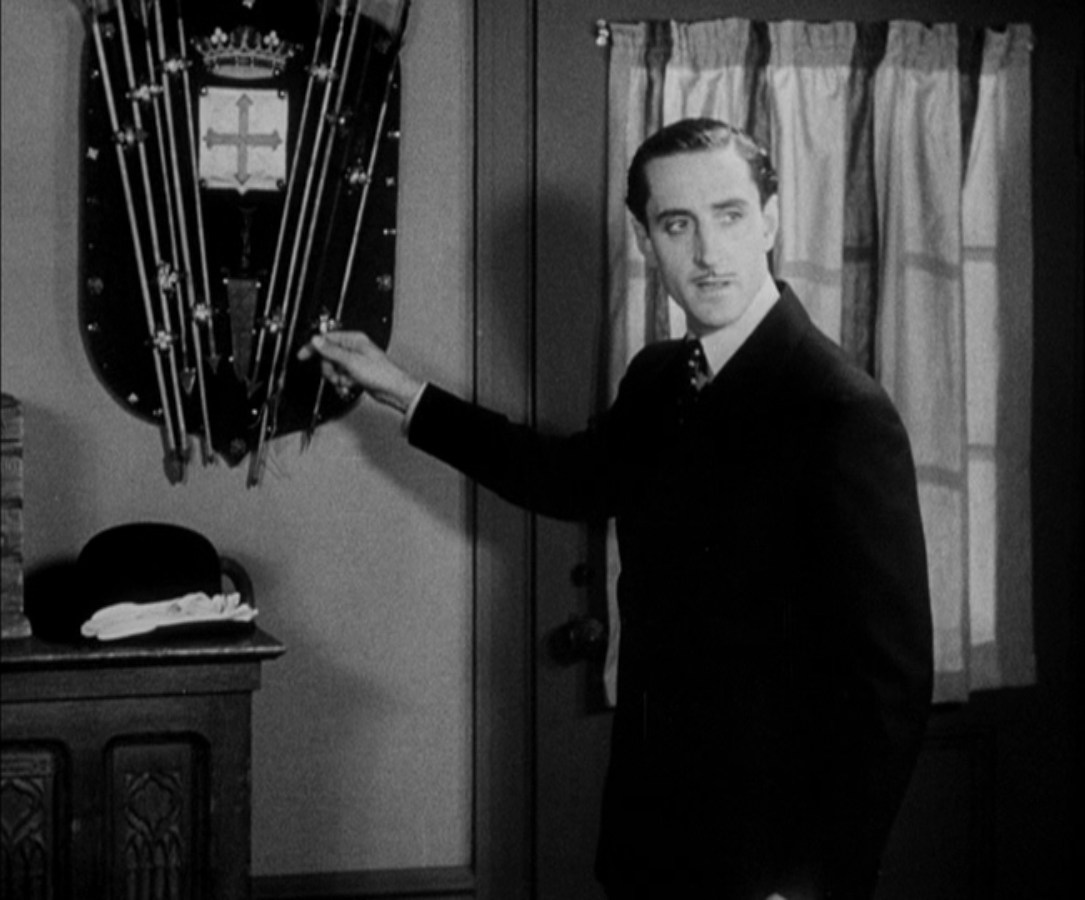 "I say...There's an arrow missing here." |
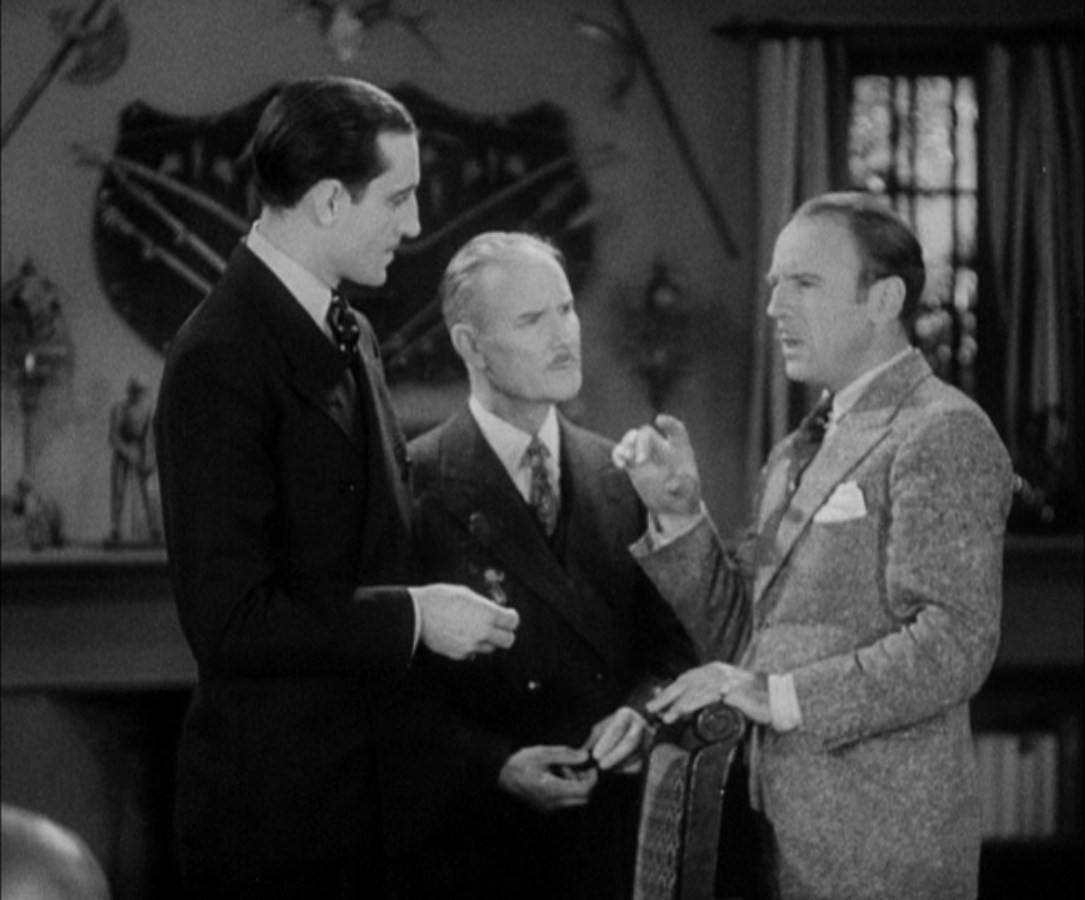 Vance questions Arnesson. |
"Rathbone was a bit too formal as Vance and failed to capture the relaxed, man-about-town quality inherent in the character. The picture itself, however, was a good mystery film with an interesting plot." —Michael Druxman, Basil Rathbone: His Life and His Films
BISHOP MURDER CASE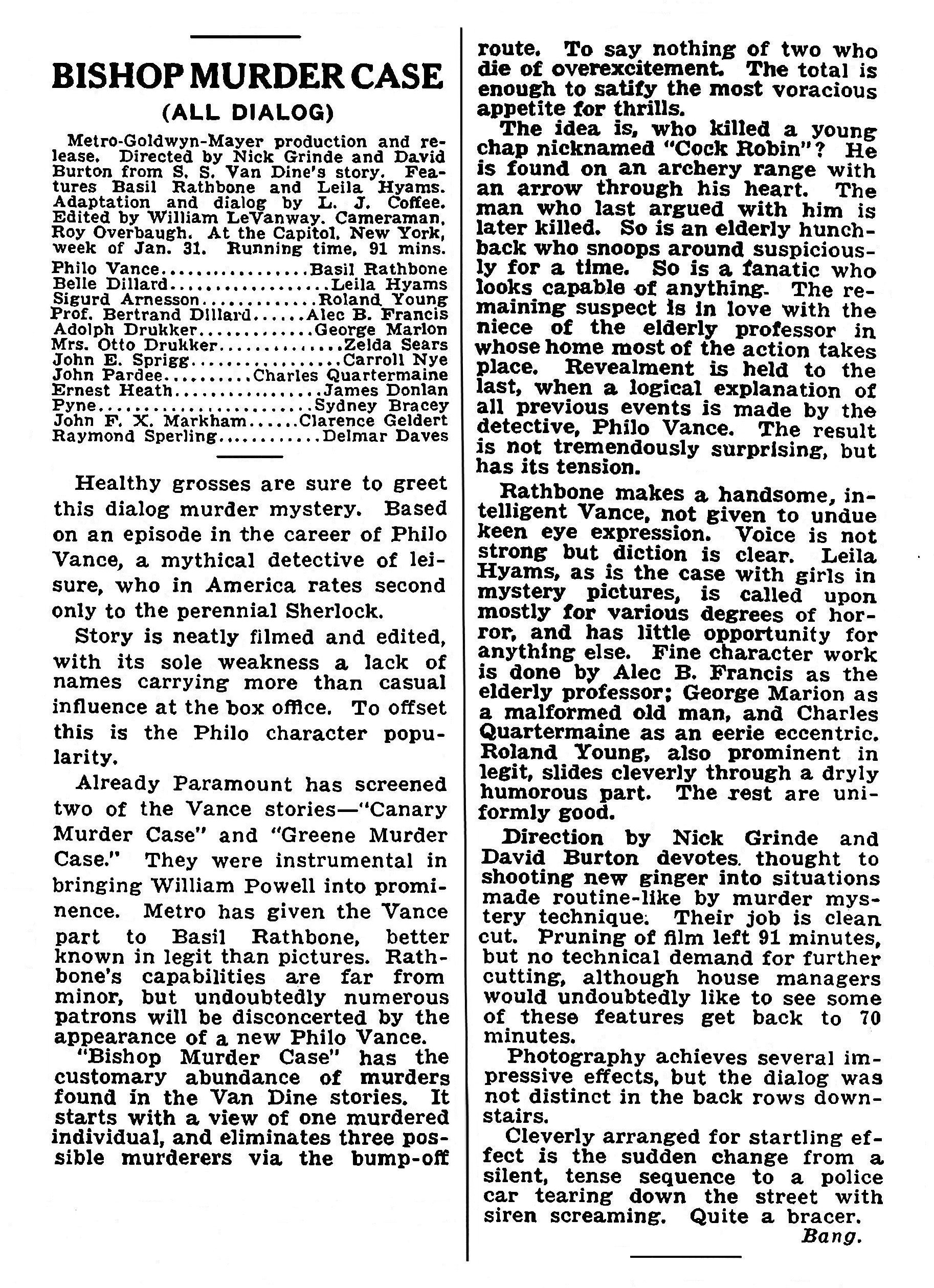 Healthy grosses are sure to greet this dialog murder mystery. Based on an episode in the career of Philo Vance, a mythical detective of leisure, who in America rates second only to the perennial Sherlock. Story is neatly filmed and edited, with its sole weakness a lack of names carrying more than casual influence at the box office. To offset this is the Philo character popularity. Already Paramount has screened two of the Vance stories—"Canary Murder Case" and "Greene Murder Case." They were instrumental in bringing William Powell into prominence. Metro has given the Vance part to basil Rathbone, better known in legit than pictures. Rathbone's capabilities are far from minor, but undoubtedly numerous patrons will be disconcerted by the appearance of a new Philo Vance. "Bishop Murder Case," has the customary abundance of murders found in the Van Dine stories. It starts with a view of one murdered individual, and eliminates three possible murderers via the bump-off route. To say nothing of two who die of overexcitement. The total is enough to satisfy the most voracious appetite for thrills. The idea is, who killed a young chap nicknamed "Cock Robin"? He is found on an archery range with an arrow through his heart. The man who last argued with him is later killed. So is an elderly hunchback who snoops around suspiciously for a time. So is a fanatic who looks capable of anything. The remaining suspect is in love with the niece of the elderly professor in whose home most of the action takes place. Revealment is held to the last, when a logical explanation of all previous events is made by the detective, Philo Vance. The result is not tremendously surprising, but has its tension. Rathbone makes a handsome, intelligent Vance, not given to undue keen eye expression. Voice is not strong but diction is clear. Leila Hyams, as is the case with girls in mystery pictures, is called upon mostly for various degrees of horror, and has little opportunity for anything else. Fine character work is done by Alec B. Francis as the elderly professor; George Marion as a malformed old man, and Charles Quartermaine as an eerie eccentric. Roland Young, also prominent in legit, slides cleverly through a dryly humorous part. The rest are uniformly good. Direction by Nick Grinde and David Burton devotes thought to shooting new ginger into situations made routine-like by murder mystery technique. Their job is clean cut. Pruning of film left 91 minutes, but no technical demand for further cutting, although house managers would undoubtedly like to see some of these features get back to 70 minutes. Photography achieves several impressive effects, but the dialog was not distinct in the back rows downstairs. Cleverly arranged for startling effect is the sudden change from a silent, tense sequence to a police car tearing down the street with siren screaming. Quite a bracer. Bang. —Variety, February 5, 1930 |
"Rathbone's performance is polished, though somewhat stolid and unimaginative." —The Talking Screen, March 1930
"Mr. Rathbone vies easily with William Powell as an interpreter of Philo Vance." —Mordaunt Hall, The New York Times, February 1, 1930
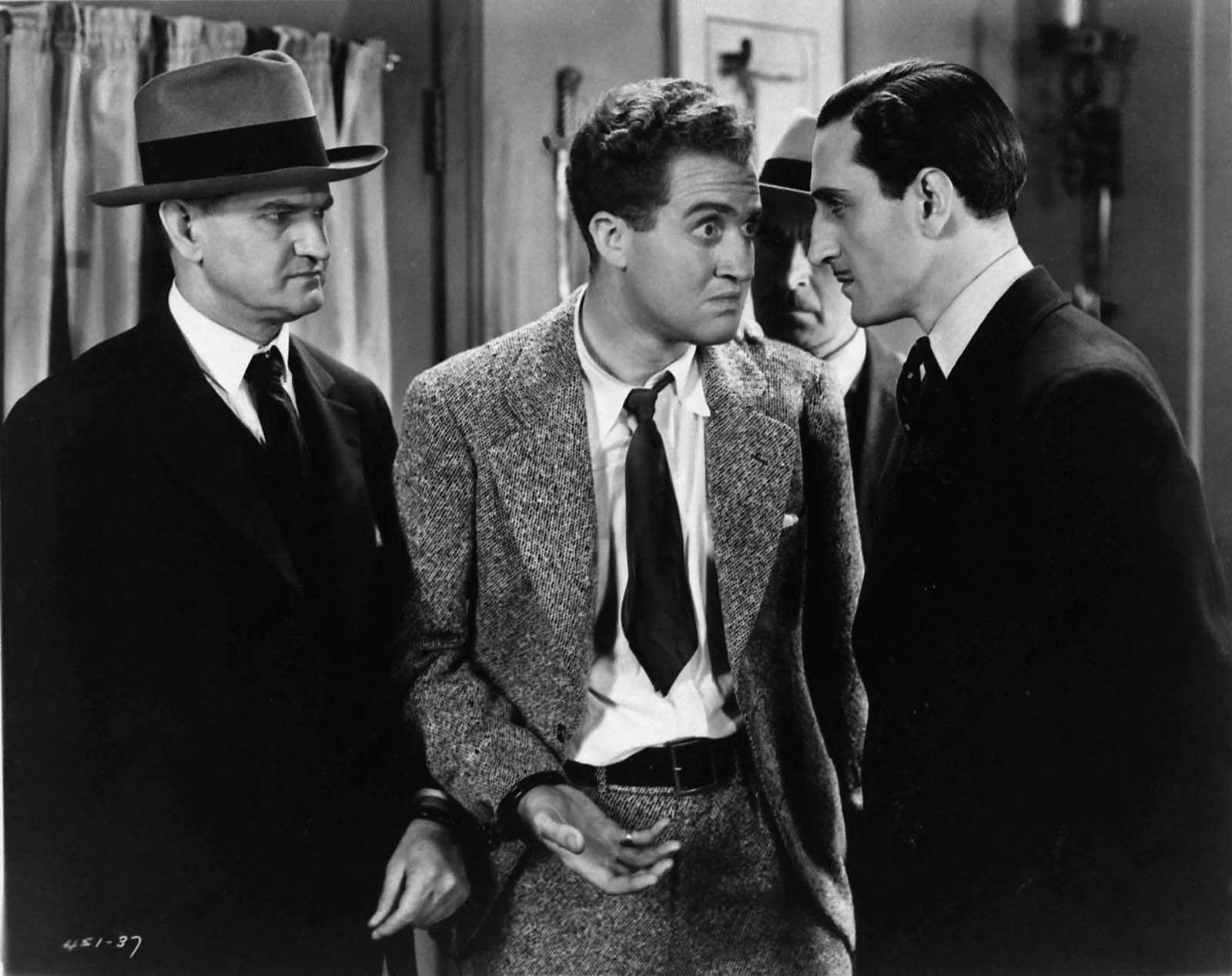 Vance questions Sperling. |
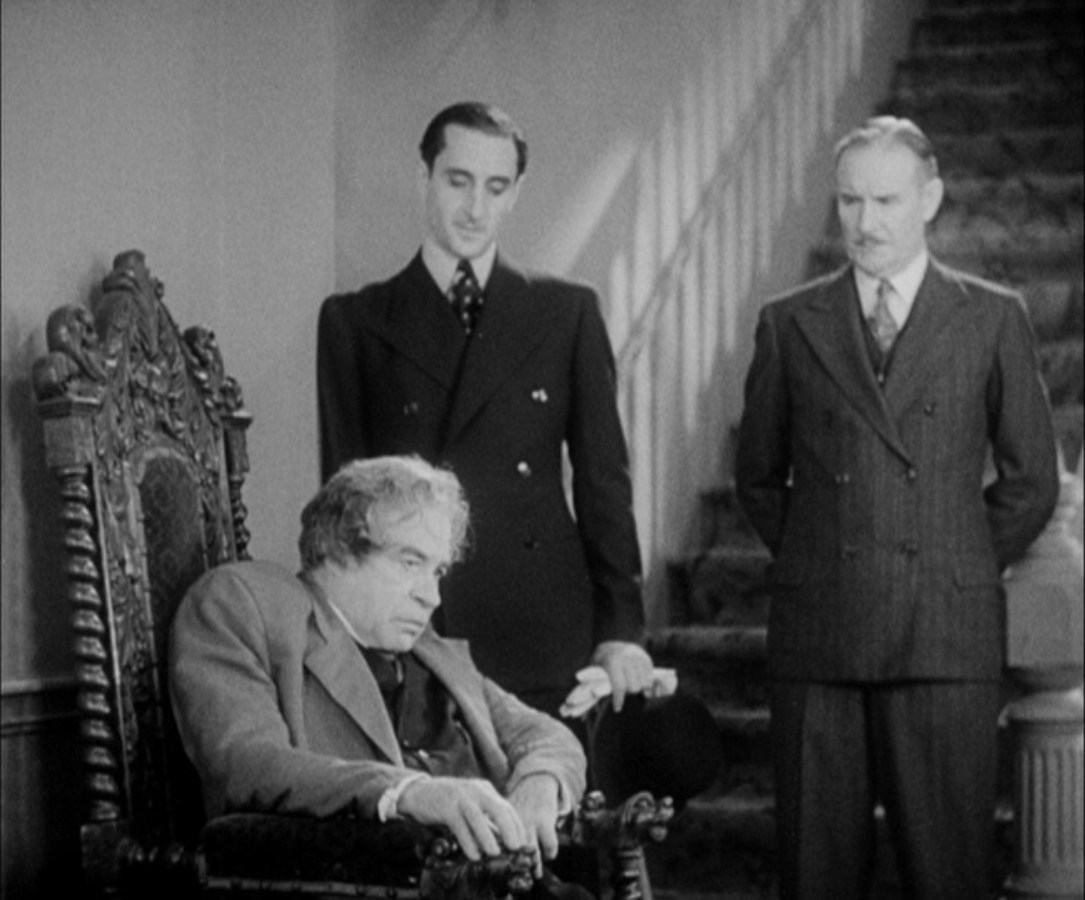 Vance and Markham interview Drukker. |
"The role of Vance represented for Rathbone an early opportunity to play a heroic lead." —Jay Steinberg, Turner Classic Movies
| You can watch the original trailer and two movie clips on the Turner
Classic Movies website: http://www.tcm.com/tcmdb/title/48/The-Bishop-Murder-Case/videos.html |
See Page Two for more reviews and pictures from the film. See Page Three for pictures of posters, lobby cards and promo photos.
.
|
.
|
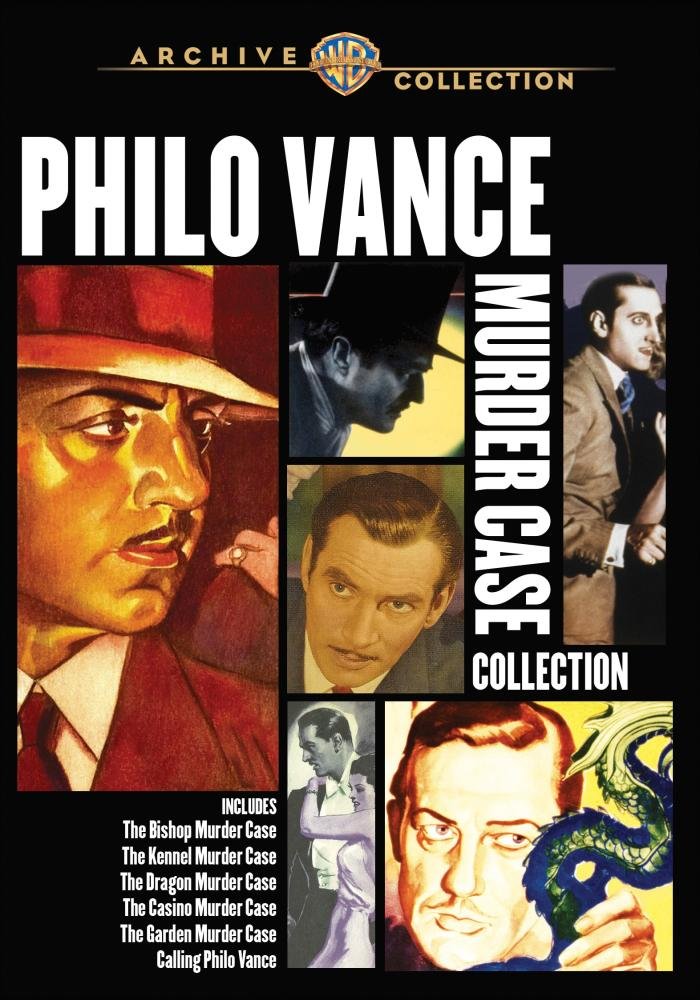
The Bishop Murder Case is available on DVD as part of The Philo Vance Murder Case Collection
|
Images appearing on this page as well as pages two and three are from the film "The Bishop Murder Case."
1 Chris Steinbrunner, and Otto Penzler, Encyclopedia of Mystery and Detection, New York: McGraw-Hill, 1976.
