|
Anecdotes
about
Basil Rathbone |
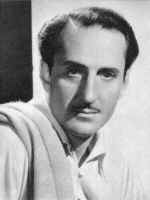 |
| Basil Rathbone touched many
lives. Some people knew him well, some only slightly, and most people only
saw him on the movie screen or on the stage. On this page you can share
your memories of Basil Rathbone, no matter how well you knew him, or
didn't know him. Perhaps something amusing happened when you were getting
his autograph, or perhaps a particular Rathbone performance inspired you
in a special way (to become an actor, for example). No matter what your
memory is, if you'd like to share it here with other Rathbone fans, please
e-mail me. You may remain anonymous if you wish, or have your name and/or
e-mail included. (Please make your wishes clear in your e-mail to me.) And
don't be intimidated by David Macklin's delightful reminiscences of Working
with Basil! |
Marcia Jessen,
gisbourne@basilrathbone.net


Richard Valley shared this tidbit:
"I met Basil Rathbone once when he was promoting
his autobiography in a local store's book department. I mentioned THE COMEDY
OF TERRORS, which I love. He never forgave me . . . "
In a letter to author J.C. Trewin, Aileen Wyse told a story about
something that happened during a performance of Paolo and
Francesca in 1915. This was when Rathbone was with Frank
Benson's company. Basil and Florence Glossup-Harris played the title
characters.
| At the end of the play the two bodies were
discovered on a bier, upon a rostrum up-stage. Four men had to carry
the bier down to the centre of the stage, for Giovanni's last
speech. For some reason unknown, nothing would induce Benson to
rehearse the last scene. ... Rathbone is a big man, and Florence
Glossup-Harris was very tall. I was playing old blind Angela
downstage R., half facing the audience. Benson had his back to the
audience, facing the bier. Suddenly I saw his face absolutely livid.
There was the extraordinary sound of a large audience all drawing in
breath at the same moment. And through the corner of my eye I saw
the four pall bearers almost apoplectic in their efforts to keep the
bier level. As they came down the steps it was too much for them. It
gradually slipped, and Paolo and Francesca, their arms linked
together in an effort to keep straight, slid off the bier on to the
middle of the stage, exactly like a couple of plaice off a dish. And
to the eternal honour of that audience, there was never a sound from
them until the curtain came down. When it cam down, Benson said,
"That scene should have been rehearsed!" And rehearsed it was, for
the next hour. |
Quoted in Benson and the Bensonians, by J.C. Trewin
|
A woman tourist gave Basil Rathbone the town's most unusual fan
experience this month. When he finished his lunch in a Hollywood
restaurant this fan pounced on his plate and kept it as a souvenir.
Basil obligingly paid the added cost of the plate to his luncheon.
from Screenland magazine (June 1940) |
The Los Angeles Times (March 9, 1937) reported the following
story:
Basil Rathbone, motion picture actor, changed his occupation to
detective yesterday long enough to capture a man he suspected of
stealing from him, and then helped Hollywood detectives chase the
suspect several blocks when he tried to escape.
The story starts with the discharge by Rathbone of Robert Lee Sapp,
29-year-old butler, some time ago when Rathbone began missing some
money, jewelry and clothing. He hired another butler. This week he
discovered that the new butler was harboring Sapp in his quarters at
Rathbone's residence, 5254 Los Feliz Boulevard, and he fired him, he
told officers. Yesterday Rathbone found Sapp in the butler's
quarters while the present servant was away, pushed him into a room
and locked the door. He called the police.
Meanwhile Sapp had jumped two stories to the ground and began
running as Radio Officers Johnson and Fitzpatrick and Detective
Lieutenants Smith and Maney arrived. Rathbone and his secretary,
Harry Dausman, joined the officers in pursuing Sapp and finally
captured him at Harvard Boulevard and Russell Street.
Sapp was booked on suspicion of burglary at Hollywood Police
Station, Dausman was treated at Hollywood Receiving Hospital for
lacerations received climbing fences in the case, and Rathbone
returned to his dramatic pursuits.
Comedian Hugh Herbert told this story about Basil Rathbone's sense
of humor:
| One day Olivia De Havilland and I were sitting on
the set swapping a few when Basil came over. You know how lovely
Olivia is, and just as sweet as she is pretty, too. Well, along
comes this Rathbone and says, "Olivia, I'm surprised and
disappointed to find you in such low company." I sniffed around both
sides of my chair, then looked up and said, "I thought I smelled
ham, woo-woo!" That started things! |
source: Modern Screen, July 1938
Ann Sheridan told a reporter about an embarrassing moment at one of
the Rathbone parties:
| There was Ouida Bergere Rathbone's last party.
You've heard of Ouida, haven't you? She's the red-headed wife of
Basil Rathbone. Her parties are the best in town, but once she had
foul luck because it poured when she threw a big shindig. We've now
nicknamed her "The Rain Maker." Anyway, at her last get-together,
the wooden dance floor was built out over the terrace, and at the
extreme end there was a dip. Well, I was dancing with Cesar Romero,
and he was feeling good, and he started a very fancy adagio. He
worked me toward that dig in the floor, and as I landed on it, I
slipped, my high heel caught inside my dress—and
rip!—whew!—a yard of the dress gone, right up the back. I was half
nude, and all of Hollywood was staring at me. My face became redder
than my hair. But I just stood there, learning a lesson in poise,
while the Japanese maid came over, and right on the floor, sewed me
decent. |
source: Modern Screen, July 1940
This story is from fellow Rathbone fan Larry Clifton:
|
I met Basil Rathbone at a college presentation when I was a junior in high school.
After going to the wrong building, and being soaked through the rain, we
arrived as Basil Rathbone was entering the stage. Of course, his readings from the great poets,
naturally including the Bard, were flawless, invigorating, and hypnotic.
All of this was due to that VOICE and his demeanor. Following the ovation,
as
he was being escorted out he noticed me at the doorway. He
paused, looked at me, and commented, “My boy, you need some dry clothes.”
I staggered, “Mr. Rathbone, seeing you was worth the drenching.” With that
he winked, patted me on the cheek, and was whisked away. I got an
autographed photo, which eventually was lost, with so much of my precious
paraphernalia. However, my remembrance of his sweetness and unique talent
have never left. “Things” come and go but kind recollections stay.
I am an old man now, 75, as BR was when he died, so I can appreciate
greatly the enthusiasm had for this unparalleled artist, who truly
belonged to another age and period. I am so glad he spanned that time to
be with us.
Larry Clifton
|
Basil Rathbone and his wife gave a party for
some Hollywood friends. When dinner was over, Mrs. Rathbone announced that
her husband would play for the guests. When the guests had been seated,
however, Rathbone pleaded that he wasn't in the mood. He begged to be
excused while he took a walk in the garden. He returned in a half hour, a
serene expression on his face. The guests sat up expectantly as he strode
into the room. Rathbone waited until they had quieted down, then walked over
over to the phonograph and played it for them!
Source: The Buffalo Evening News,
February 9, 1950
|
Basil Rathbone is a little fed up with his attempts to carry over in real life his
detective portrayals in Sherlock Holmes. Just recently, he installed an
invisible ray burglar alarm at his home. The electric gadget hooks up with a
private detective agency. The first night the alarm was installed, the dicks
made three hectic and hurried calls to the Rathbone domicile. The first
alarm was touched off by a dog, the second by the gardener, and the third by
the milkman. Basil dismantled the machinery the next day, and the agency men
caught up on lost sleep.
Source: Hollywood magazine, October 1939 |
This anecdote concerns the friendship that Basil Rathbone had with tenor
Richard Tauber. Tauber's widow, Diana Napier, gave a journalist the
following story:
|
"When I had no money and Richard died, the Rathbones were the only people
to send me money to pay the doctor's bills." ... As Tauber lay dying
[January 1948], he asked for caviar. She phoned the Rathbones in New York.
"My darling Richard is dying," she told them, and asked if they could grant
his wish. The caviar was sent by air. "It arrived four hours before he died.
He was too weak to eat it."
Source: Daily Herald, April 3, 1959
|
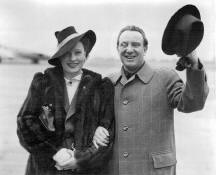
Diana and Richard Tauber |
|
In his autobiography, Basil Rathbone wrote about his reunion with
Corporal Tanner, sixteen years after they had served together in the first
world war. The year was 1934, and Rathbone had appeared with Katharine
Cornell at the Paramount theater in Toledo, Ohio. He was surprised to learn
that his former army buddy had become a policeman in Toledo. They arranged
to meet at the Commodore Perry Hotel, and the press reported about the
reunion. Here is one newspaper clipping from December 1934. "Tanner" is
misidentified as "Turner."
|
Lieut. Basil Rathbone Meets His Old Sergeant in Toledo
Basil Rathbone, English
actor, and Patrolman Ray Turner of the Toledo, Ohio, police force, met for
the first time since they served together in the World War sixteen years
ago, when Rathbone appeared with Katharine Cornell in that city recently. Rathbone was a second lieutenant and Turner a sergeant in the Liverpool
Scotties of the British forces.
“You taught me all I ever knew about the army,” the actor told the policeman.
“Well, you didn't know much about it when you came to us,” replied
the patrolman. “I thought you were a snob until I went to you for
orders the first morning and you ordered me to take a drink.” |
This anecdote is from a college student newspaper called The Stick:
|
Some of us are right at home among the big movie stars, is that
true Sue Bolger? It seems that Sue, Kay Donovan, Mary Jennison and
this columnist with Miss Warymann and Miss Cunningham headed for the
big city and The Heiress the other night. The play was wonderful,
and then Sue was enlightened with the bright idea of going backstage
and interviewing Rathbone for the STICK. Kay agreed, but Mary Jensie
begged off saying that she'd rather Basil didn't see her with her
hair so short, and yours truly prefers comedians. So off headed Sue
and Kay for the back regions and our hero. Bravely they opened the
dressing room door and were greeted cordially by Rathbone in various
stages of undress — shorts to you. Out like two bolts of lightning
backed the girls and when the valet had finished dressing the movie
butler, resumed the interrupted interview. Kay scared him by asking
how he liked Henry James, the author of the play and his works. Mr. Rathbone, fearing that he was dealing with two
intellects, froze and became extremely polite and so the scene
ended. Anyone who would like further details as to muscles etc.
may see Sue or Kay, who are now saying “Shake the hand that
shook the hand.”
from The Stick, vol. 14, issue 10. Publisher: Fitchburg State
Teachers College, Massachusetts. Publication date: 1949-04-07 |
The following anecdote is from a 1934 newspaper clipping. The name of the newspaper and
the date of the article are unknown. What is known is that Basil Rathbone
and Katherine Cornell were touring the country in 1934, giving performances
of Romeo and Juliet, The Barretts of Wimpole Street, and Candida.
.
|
Here’s News: Dog Bites Hotel
This is a story about Moritz, a Belgian sheep
dog, who went about Wednesday happily unaware that he was the cause of quite
a good many upset nerves, and an amusing situation that involved two of
Oklahoma City’s leading hostelries.
Moritz belongs to the distinguished English
actor, Basil Rathbone, appearing at the Shrine with Katherine Cornell. Moritz is 14 years old, has long
been the pride of Rathbone’s life. The actor would almost as soon travel without
his right leg as without his dog. Miss Cornell also travels with two dogs: Flash,
a cocker spaniel who has quite an important part in her play, and Sonya, her
beloved dachshund.
It happened that Rathbone made a reservation to stay
at the Skirvin hotel. Somebody learned that Moritz was involved, and
informed Rathbone that the Skirvin does not entertain dogs. Whereupon the
reservation was promptly cancelled and the entire Cornell party arranged to
stop at the Biltmore.
It came upon the Skirvin management that
something had gone amiss. Frantically they tried to save the situation. A
wire was sent to the Cornell party offering nothing less than the
presidential suite. It was added that W.B. Skirvin’s private car would be
sent to the train to meet the party.
“The Biltmore people had been lovely to us and
we couldn’t see any reason for changing our plans again.” Miss Cornell
remarked.
And it so happened that the party, including
Moritz, Flash and Sonya, were established at the Biltmore Wednesday, and
doing very nicely, thank you.
“Sure, we take dogs, cows, anything that can
pay its bill,” said R.P. Durkee, Biltmore manager.
|
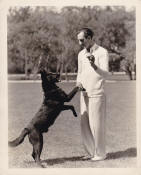
Basil and Moritz, 1930 |
|
|
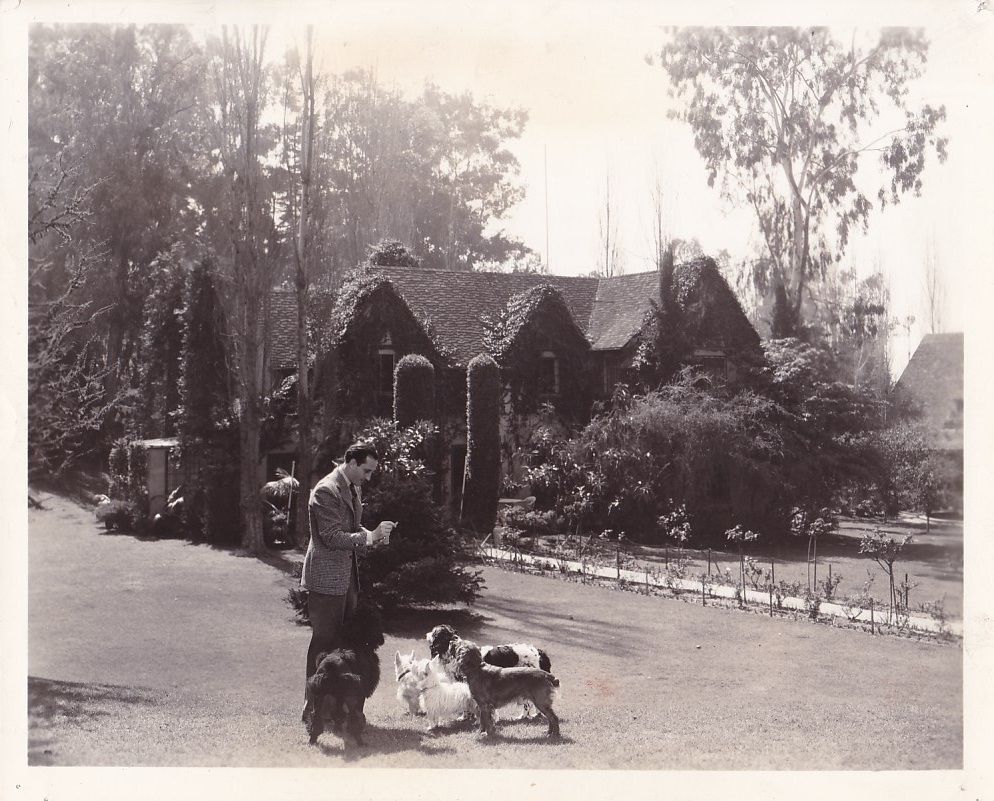
The house which Jack Dempsey and Estelle
Taylor occupied was a Hollywood landmark for years. Basil Rathbone lives
there now. Looking for Mr. Rathbone the other day, we were fooled because
ivy has completely disguised the building. We stopped at a similar house and
asked for Mr. R. "Sorry," said an unfriendly-looking woman. "Never heard of
him."
"But," we persisted, "he lives in the old Jack
Dempsey house—where Jack and Estelle Taylor lived."
"Never heard of any of 'em," quoth the lady.
She slammed the door.
We found Mr. Rathbone and the house next door,
not twenty yards away. So much for Hollywood landmarks.
from Picture Play, June 1937, p. 88 |
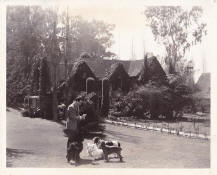
The
Los Feliz house |
|
Basil Rathbone, I'm afraid, has lived in Hollywood long enough to expect
the worst from rings at his doorbell. Anyhow, shortly after he moved to Bel
Air, when he heard a commotion at the front door and glimpsed a red-faced
man with his tie under one ear, his first impulse was to cry to the butler,
"Don't let him in!" Second thought led him to investigate—and just as well,
too. The red-faced man panted, "So sorry to trouble you, old man! But you
see, I've got this appointment to speak at a banquet. My wife's away and my
man has broken his wrist and look here! You're awfully good at this sort of
thing. Would you—would you be so kind as to tie my tie for me? Just as a
neighborly gesture?"
Basil shouted, "Why, of course, of course!" and started right in to
assist the distressed one. But it turned out that he had to call Ouida after
all because he discovered that while he can certainly tie a perfect bow
under his own personal chin, it's another matter entirely to approach the
matter backward, as it were, and tie it under someone else's chin. By the
time Ouida arrived the tie was in rags and they had to send upstairs for one
of Basil's and by the time that was all attended to, the three of them were
fast friends. And the red-faced gentleman turned out to be an important
picture executive and everyone in Hollywood knows that it's a fine thing to
be fast friends with an executive. There must be a moral somewhere in this.
Source: Hollywood magazine, August 1940, p. 43
"E.C. Writer," a reader of
The Baz (a blog about Basil Rathbone),
shared this memory of meeting the great actor:
| I met Mr Rathbone once in the mid fifties,
around 1954. I was in my twenties so do the math. I’m afraid I
recognized him in the street in NYC, CPW near Columbus Circle,
and spoke before I was even aware. He looked quite startled but
was very affable and kind while I did a bit of gushing about the
films I’d seen and loved. I’m afraid I was a Holmes fan and
raved rather about The Hound of the Baskervilles, but contrary
to what others have said he didn’t seem put off and actually
told me it was the Holmes film he’d enjoyed making most. I said
I loved the two period films, he said he had reservations about
the second but mostly because the experience of making it had
not been easy as the director was a harsh sort of man, and he
said the plot was “what someone polite would call loosely
woven.” I said I’d been unhappy they updated the Universal films
he said Holmes fighting Nazis had been a mistake. He had a young
girl with him who I think was his daughter. She looked about 13
and was holding his arm rather sweetly the whole time we spoke.
Physically he was very tall and commanding, and his eyes were a
very deep grey/blue. I got a strong impression of his
personality, which was of a restless sort of probing
intelligence, surface reserve (I was a stranger accosting him in
the street) but a great deal of natural warmth just behind it. I
had the sense he was appraising me very quickly and would miss
nothing of the subtleties and undercurrents in things around
him. Without the warmth beneath the surface I would say he was
almost like meeting Mr Holmes himself. We spoke for just a few
minutes but the impression was vivid. I’m a male, not one of his
lady-fans who still seem to be legion. from
https://thegreatbaz.wordpress.com/2012/08/25/basil-rathbone-his-biography/
|
|
| The elegant Basil Rathbone, wearing a lavish medieval
costume, all-black silk tights, velvet tunic silver buckles and
things, was entertaining a gushing lady in his studio bungalow.
Talking sixteen to the dozen and dipping at the same time into
the elaborate hamper in which he brings his lunch to the studio,
he absently extracted an egg and tapped it on the edge of the
table. Only there'd been a mistake somewhere and the egg wasn't
hard boiled and it spattered all over the tights and the velvet
tunic and the silver buckles and the table cloth and all of a
sudden the dashing creature was just a man who had spattered raw
egg all over himself and was just as mad about it as any other
gent would be, who maybe hadn't spent a considerable portion of
his life perfecting a suavity and a polish which are worth lots
and lots of shiny dollars at the box office. from Silver
Screen, September 1940, page 44 |
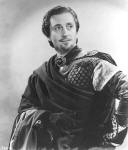
The elegant Basil Rathbone |
|
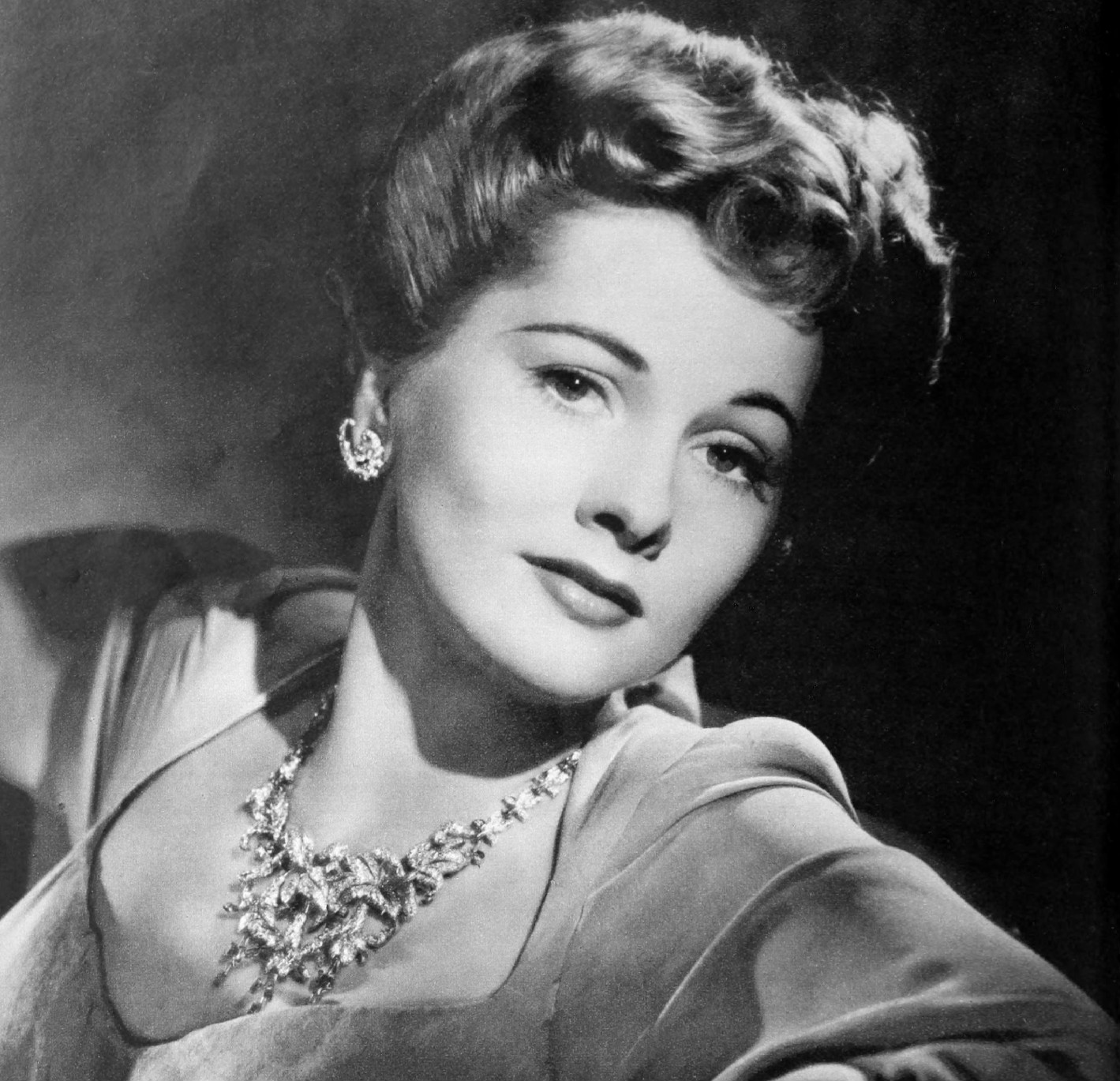
In 1955, Basil and Ouida stayed in California while Basil was working on a
film. They leased their New York City apartment to actress Joan Fontaine
for a period of six months. Fontaine wrote the following
in her book No Bed of Roses:
| By New Year's the lease on the Park Avenue apartment had
expired, and the girls and I moved into the Basil Rathbone
apartment on Central Park West. ... Sliding down a snowy hill
at the Paleys' one morning with the children and Shipwreck [John
Kelly, football player], I went over a rough bump on my aluminum
flyer, Debbie [Joan's daughter] riding on my shoulders. Late
that afternoon, our first at the Longacre Theatre (the play had
had to move from the Ethel Barrymore), "Gadge" Kazan rehearsed
the cast in our new surroundings. Feeling intense pain, I
somehow got through the night's performance. By morning both my
shoulders felt as though splinters of glass had been imbedded in
them. Acute bursitis held my arms stationary. The theatre
physician injected novocaine and cortisone into the bursae. ...
My understudy, Mary Fickett, was alerted. She went on that
evening and all the rest of the evenings of Tea and Sympathy
on Broadway to considerable and much deserved acclaim.
I returned to the Central Park West apartment and spent many
painful days in bed until I was able to pack up my family and
return to California. I had paid the rent in advance for six
months, but I had stayed only three. Before leaving I had the
windows washed, the floors waxed, the entire apartment
thoroughly cleaned. Then I phoned the delighted Rathbones to say
they were welcome to move back in. When I reached California and
Fordyce, I found waiting for me on my desk a bill from the
Rathbones for two missing dish towels and a chipped glass
tabletop which had been damaged before I moved in. I paid the
bill.
Joan Fontaine, No Bed of Roses (New
York: Wm. Morrow & Co., 1978) pp. 241-242
|
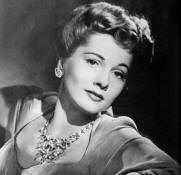
Joan Fontaine |
|
On
November 27, 1931, Basil Rathbone appeared on the Nestle Chocolateers
radio program (with Nat Brusiloff's Orchestra, NBC). Variety
reported the following:
Basil Rathbone sprang a big surprise as guest artist for Nestle. Instead
of recounting some of his past stage or screen experiences or relating a
few anecdotes relative to his past, as is the custom among straight
leading men of stage or screen who go before a mike, Rathbone entertained
as a songster.
In announcing his song numbers, Rathbone mentioned that this was the
first time he has warbled on radio since he started to study singing. The
actor did three songs, all of them off the beaten track. They were a poem
by John Masefield; spiritual "Deep River," and a song announced as written
by Ernest Torrence, film actor.
Rathbone's singing voice is altogether different than one would imagine
from hearing him speak. He sings in a deep baritone.
Besides the songs Rathbone handled some light comedy lines with the
announcer between numbers. His English accent is not a detriment, as this
actor makes the listeners feel the accent is genuine and not a pose.
Source: Variety, December 1, 1931
| PREMONITION John Miltern, veteran Hollywood character
actor, went to see "Rainbow on the River" with his friend Basil Rathbone.
Miltern was so impressed by Bobby Breen's singing, he said to
his friend: "When I die, I'd love to have that boy sing my
requiem." Three days later Miltern was killed by a hit-and-run
motorist—and Rathbone got Bobby to sing "Ave Maria" at the
funeral!
from Radio Mirror, May 1937, p. 7 |
_-_John_Miltern.jpg)
John Miltern |
|
Bernard J. O'Heir, a long-time fan of Basil Rathbone, shared this memory of meeting
Robert Quarry (star of two vampire pictures: Count Yorga and The
Return of Count Yorga). Quarry was a guest at the Ninth Annual Fanex
Science Fiction/Horror Convention, held at the Sheraton in Towson, MD, on
July 23, 1995.
| I talked to Mr. Quarry on Saturday morning, July 23, 1995,
and he told me the following concerning Basil Rathbone, himself,
and The Spider Woman film. He stated that at the time
he was about 16/17 years old, and under contract with Universal
to play very small bit parts in any film that Universal thought
he would be suited for. He remembers getting a call to go to the
set of the Rathbone film Spider Woman, but he was not
told what the job would be.
He stated to me that when he arrived on the set, they put him
in make up and after that put a white, medical-type smock on
him. They laid him down on a table, and began to apply liver
paste on the smock, in straight lines from his shoulders down to
his legs. When he asked the technicians what the liver paste was
for, they said it was for the "tarantulas." He immediately said,
"What tarantulas?" They told him the tarantulas that would be
crawling down his body during the scene he was going to be in.
He said to the technician who was applying the liver paste, "You
mean to tell me you're going to have tarantulas crawling down my
body?!" The technician said yes, but not to worry because they
were perfectly safe, they had no stingers and no poison. Quarry
said, "I don't give a goddam if they are safe, I'm not going to
let any goddam tarantulas crawl down my body no matter how safe
they are!" The technician said, "But you have to do it. Mr.
Rathbone is afraid of the tarantulas, so that is why we are
having you do this." Quarry said, "No shit, Mr. Rathbone is
afraid of tarantulas and so am I so you and the tarantulas can
go to hell!" He then got up off the table, took off the coat,
and left the set.
Later the next day he was called in to the office of one of
the executives of Universal (he could not remember the person's
name), and was told, "who do you think you are refusing to do a
job like that? You'll do as you're told!" Mr. Quarry said he did
not mind doing almost any kind of scene, but he would not appear
in any scene with tarantulas.
That was the end of the conversation.
Bernard J. O'Heir |
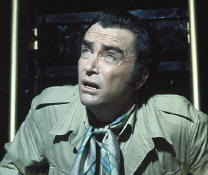
Robert Quarry |
|
The following story can be found in the September 1938 issue of
Screenland magazine:
|
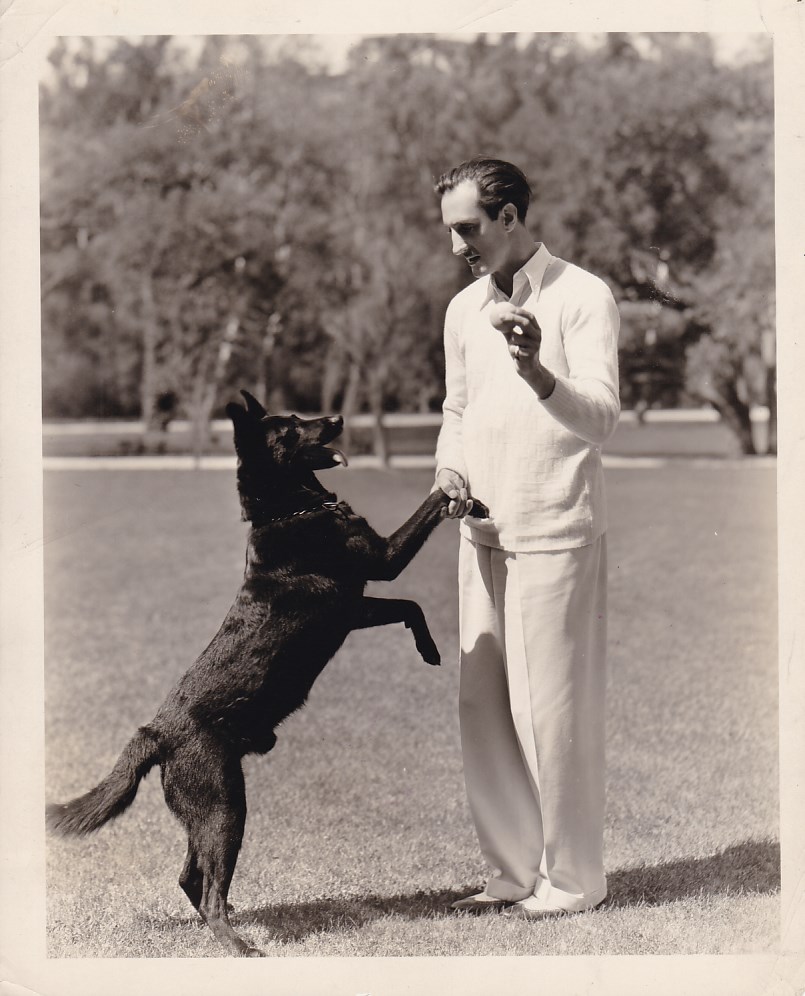
Basil Rathbone gave his best performance gratis this week. He was
putting his dogs through their tricks on his front lawn when,
suddenly, he was conscious of five heads topping his tall hedge. He
was afraid the boys to whom the heads belonged would fall and hurt
themselves, so he cried at them to come on over and in. Courteously
he sat them down in a semi-circle and continued his dog show. When
he finished, one of the kids said, "Can we see your house?"
Whereupon they trooped through the rooms where Hollywood's most
elegant parties are held. "It's a swell dump for a villain!"
muttered one of the pleased visitors. Basil ordered the butler to
serve cake and cokes, which was the final touch. The company left in
a trance. |
David Leddick, one of Cynthia Rathbone's friends, sent the following
memoir:
|
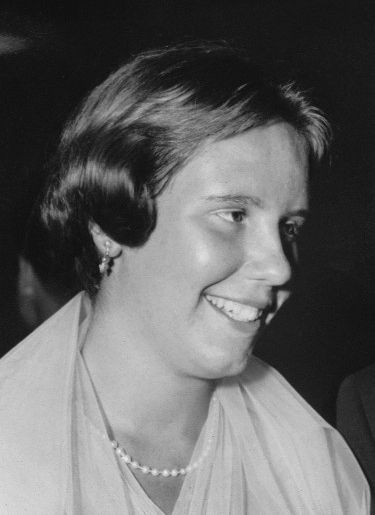
In Memoriam of Cynthia Rathbone
I worked with Cynthia Rathbone at Hockaday
Associates in the early 1960s. Perhaps 1962 and 1963. Hockaday was then one of
the new small front-edge advertising agencies in New York. We had perhaps 30 to
40 small clients, all of them selling expensive top-of-the-line products. Crane
Papers, Elizabeth Arden, Grant's Scotch.
Miss Hockaday, the President, wanted her staff to
be young, smart, fashionable. Clients liked the agency as much as they liked the
advertising. Cynthia Rathbone was part of this young but adult world. Rock and
Roll, The Beatles, and Mick Jagger hadn't come on the scene yet.
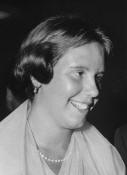 Cynthia was a big girl. Not fat, but tall, sturdy,
dark-haired, good-looking in an upper-class, healthy way. She had an unabashed
personality. She had no problem in presenting herself in a self-confident,
amusing way to clients. She worked as an associate account person but was very
much one of the inner circle of creative types among the writers and art
directors. We lunched a lot. We laughed a lot. No one was pretending to be
someone he or she was not. Cynthia wore bright green a lot as I remember, which
went well with her bold, dark look. Cynthia was a big girl. Not fat, but tall, sturdy,
dark-haired, good-looking in an upper-class, healthy way. She had an unabashed
personality. She had no problem in presenting herself in a self-confident,
amusing way to clients. She worked as an associate account person but was very
much one of the inner circle of creative types among the writers and art
directors. We lunched a lot. We laughed a lot. No one was pretending to be
someone he or she was not. Cynthia wore bright green a lot as I remember, which
went well with her bold, dark look.
You were supposed to be witty in New York then.
Grown up and witty. Vast dance halls with ear-splitting music didn't exist. You
went out to supper clubs where everyone smoked and talked right through the
entertainment. Billie Holiday? Yes, but as I was saying, this was a kind of
sophisticated world that was . . . [rest of sentence is missing].
Cynthia was the daughter of the famous Hollywood
actor Basil Rathbone, known for his role as Sherlock Holmes in a number of
films. His wife was Ouida. Cynthia had been adopted. We all knew that her small,
forbidding mother didn't have the kind of daughter she wanted. I think we all
made an effort to reassure Cynthia that she was one of us, one of the
self-assured and socially unquestionables. In our own way we were a team of six
or seven and Cynthia was one of us. I don't think any of us anticipated that
Cynthia would be dead within the next decade of drink and drugs.
I think Cynthia was lost because our world
disappeared. She didn't move into a future of a husband, children and a house in
the suburbs. Really, none of the other women in the group did either, though
some married and had children. Being a little younger than the rest of us, I
think the nightlife that descended on New York swept her away. The large,
lifeless apartment she shared with her parents wasn't really a home. They
weren't really parents, distant as they were to her and each other. They moved
in cafe society. Their names appeared in the papers. Cynthia wasn't for that
world. Her energy, force, enthusiasm didn't find a place where she could like
herself. I think her new friends were impressed with her, but they couldn't
reach out and save her. That wouldn't have been the New York way.
David Leddick
|
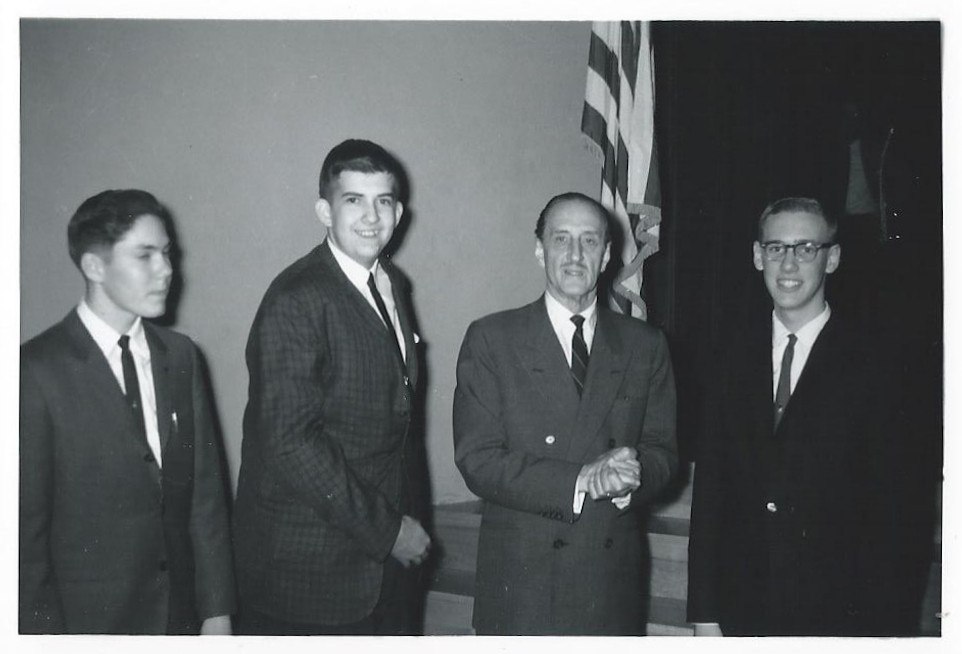
Wes Shank, a long-time fan of Basil Rathbone, shares his memory of a
special meeting with the great man:
| I had the privilege of meeting Basil Rathbone briefly at Harriton High School
in Rosemont, Pennsylvania, on February 26, 1963. He was on some sort
of lecture tour. I did not have tickets to the event, but since
I was a student at the school, I was able to sneak in towards
the end of the lecture with two of my close friends. I
specifically recalled that he requested no autographs were to be
given or no photographs be taken, but I was bound and determined
to get both. I persisted and eventually got both! The photo of
that meeting appears to the right. Wes Shank |
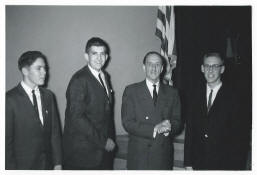
From left to right are: Jack Oakes, Dave Gabelman, Rathbone and Wes
Shank. |
|
Quinn O'Hara, an actress who co-starred with Basil in The Ghost in
the Invisible Bikini, shares her memories of Rathbone:
_small.jpg) WOW!
I have only great things to say about him. He played my father in
"The Ghost In The Invisible Bikini" from 1966. He was the very best.
I remember being afraid I would accidentally call him "Mr Bathbone"
and told him so. He smiled most graciously! From then on, it was
just a sheer pleasure working with him. He had put me right at ease.
What a delightful man. I can only say everything was super. He is
the only "Sherlock Holmes" and "Sheriff of Nottingham" in Robin Hood WOW!
I have only great things to say about him. He played my father in
"The Ghost In The Invisible Bikini" from 1966. He was the very best.
I remember being afraid I would accidentally call him "Mr Bathbone"
and told him so. He smiled most graciously! From then on, it was
just a sheer pleasure working with him. He had put me right at ease.
What a delightful man. I can only say everything was super. He is
the only "Sherlock Holmes" and "Sheriff of Nottingham" in Robin Hood
for me.He was superb in everything he did. I understand he and
his charming wife used to throw the most wonderful parties. All I
can say is that he was the best, wonderful "Daddy Dear" an actress
could ask for. He was warm and funny yet so absolutely "proper." To
say he was a real pro is an understatement. He was one of a kind.
Every role he did was great and unique unto itself. To call him a
very charming gentleman is putting it mildly! I consider myself very
lucky to have had the opportunity to not only meet him, but to
appear as his co-star in "The Ghost in the Invisible Bikini."
Quinn O'Hara |
In an article written for the Highland Park News, Chuck Wenk
told about a practical joke that broadcaster Bob Elson played on Basil
Rathbone. Wenk wrote:
|
Basil Rathbone, the actor who played Sherlock Holmes in the movies for
years, was in Chicago one week when the Sox were home, and asked if Elson
would interview him to promote his new movie.
As Elson’s statistician in those days, I was sitting right next to him when WCFL engineer Carl Swanson put Rathbone’s phone call through to Elson, so I
could hear what he told Rathbone. “Come up to the booth at 5:30 before the
night game tomorrow, and you can be my guest on the interview show!”
When he hung up the phone, I reminded Elson that he had no on-air show ’til
right before gametime.
“Keep that to yourself, young man, and we’ll have some fun with this guy,”
The Commander instructed me.
Sure enough, Rathbone and his agent made it up to the radio booth just after
5 p.m. the next night, and it was just the four of us in that tiny, open-air
booth. A few minutes after they arrived, Elson motioned for me to put on my
headphones and he told Rathbone that “Young Wenk here will point to me when
we’re on the air, and we’ll take it from there.”
I shook my head in disgust, but with Elson glaring at me, I finally gave him
a fake signal, and Elson went into his usual intro ... “This is BOB Elson,
at Comiskey Park, where we’re privileged to be able to visit with
Hollywood’s Sherlock Holmes — Basil Rathbone!” Bob was speaking carefully,
with plenty of animation, into a “dead mike” that was plugged in, but might
as well have been a toy, because the “interview” wasn’t going anywhere
further than the booth itself.
I kept checking my watch as if this whole thing was on a time-schedule,
and when the conversation seemed to be coming to a close, I held up 10
fingers, and then pointed to Bob as he “signed off.” Rathbone shook
Elson’s hand with obvious appreciation, and he and his agent left the
booth, hoping thousands of fans had heard him promote his movie.
“Bob, how can you do that to the guy?” I asked him afterward. Elson smiled,
having enjoyed another of his frequent pranks, and told me “we’ll probably
never see the guy again, and if he asks his friends whether they heard him,
of course they’ll all insist they did ... they’ll be afraid to admit they
missed the show!”
The next night, both of us were shocked to see Rathbone back up at the
booth, presumably to confront us for faking the whole thing. Elson nervously
shook his hand, and Rathbone began, “Bob, I can’t tell you how many of my
friends caught the broadcast and loved it! You’re really a sport, Bob, and I
appreciate you getting me on the air on short notice!”
Lucky for us, Rathbone only played a sleuth in the movies.
|
Source: "Bob Elson: A Broadcast Booth Prankster,"
Highland Park News,
October 18, 2012
Michael Hoey, son of British actor Dennis Hoey (Inspector Lestrade),
tells how he met Basil Rathbone:
| I met Basil Rathbone in 1944 when my father took a friend and me to
Universal Studios in the San Fernando Valley to visit the set of the
Sherlock Holmes film The Pearl of Death. I was nine years old and
terribly excited, as I had never been inside a motion picture studio
before. I have fond memories of my visit that day to the set of The
Pearl of Death and the excitement it created in me that would one day
influence my decision to choose motion pictures as my career, a decision
that I have never regretted. For a long time after that visit, I kept two
autographed photographs on my bedroom wall — the first was of Basil Rathbone and Nigel Bruce in their familiar pose standing side by side, and
the second was a head shot of Nigel Bruce upon which he had inscribed the
following: “To Michael, who is a nice boy in spite of his father.” One day
that photo just disappeared from its place on my bedroom wall and I never
saw it again. I suppose that my father grew tired of the sentiment, even
though it was written in jest. The other autographed photo remains a
treasured part of my film memorabilia connection. I would see Rathbone once again in 1965 when I was working at Producers
Studios in Hollywood and I heard that he was working that day on the
adjoining stage to ours in an AIP production with the dreadful title, The
Ghost in the Invisible Bikini, which was no improvement over its original
title Bikini Party in a Haunted House. Wanting to pay my respects, during
a break in filming I went next door and found him seated in a director’s
chair away from all of the activity. It had been 21 years since I had last
seen him at Universal and, although I had watched him perform in numerous
films over the years, I was nonetheless shocked to see the frail old man
seated in the shadows, drinking a cup of tea. I introduced myself,
reminding Mr. Rathbone of my father, and of our meeting in 1944 on the set
of the Sherlock Holmes film. He seemed vaguely to remember my father and
politely asked about his health. When I informed him that my father had
died several years earlier, he nodded silently, as if to acknowledge his
own mortality. I couldn’t help feeling that I was intruding, as he seemed
to drift off into his own thoughts, so I made some self-conscious comment
about the continuing popularity of the old Sherlock Holmes films, to which
he smiled graciously and I then excused myself. As I walked back to my
stage I grew angry that this once great actor was now reduced to playing a
supporting role to a cast of callow teenagers in a low-budget exploitation
film. |
(Excerpted with permission from Michael Hoey's book Sherlock Holmes
& the Fabulous Faces: The Universal Pictures Repertory Company. Click
here to read more about the book.)
Penny tells this story of meeting Basil Rathbone
when she was a little girl:
| My Mom and I were shopping in Bambergers Dept store in Newark, New
Jersey. We saw a huge crowd, and when Mom spotted Basil Rathbone, we got
right in the middle of it. I don't know what he was doing there,
besides signing autographs. I learned later that he was starring
in Witness for
the Prosecution at the Paper Mill Playhouse in Milburn, N.J. Apparently
he did lots of public appearances at that time. Mom was a movie buff, so
when she was asked if her little girl would pose for a photo with Rathbone,
she practically threw me up on the platform. The photo was in the
newspaper the next day, with the caption "Elementary, My Dear Penny." Mom wrote to Rathbone and told him how thrilled I was to meet him, and
how before that I had had a crush on Yul Brynner (from The King and I),
but now all I could talk about was Mr. Rathbone! He wrote a letter back to
Mom, and included a photo inscribed to me. In the letter he wrote, "I feel
very flattered to have taken over Yul Brynner." I remember him making
quite an impression on me. He was a lovely man, and big!
Penny
|
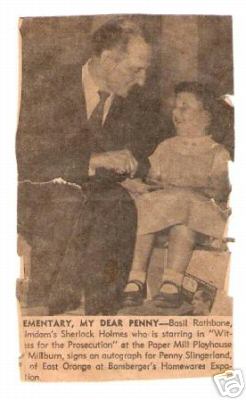 |
|
Visit the Letters from Basil
page to read the letter that Penny's mother received.
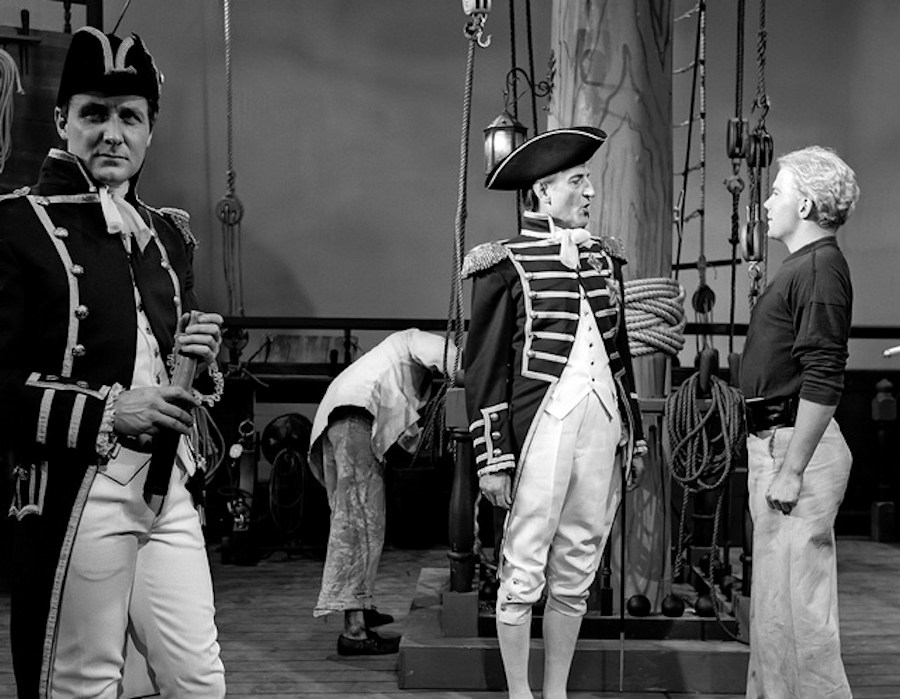
| In
2004 William Shatner was a featured guest at the 21st William S. Paley
Television Festival, The Museum of Television and Radio's annual salute to
the history of television. Ron Simon, the curator of the New York branch
of the Museum of Television and Radio, introduced Mr. Shatner to the
audience. After a presentation of film clips showcasing William Shatner's
prolific career, including appearances in live television broadcasts
during the 1950s, Ron Simon talked with Mr. Shatner.
"Sharing a couple of memorable moments of when things did go wrong [in live
television] Shatner recounted the story of working with Basil Rathbone in a
1955 Canadian production of the drama Billy Budd. Admitting that he and the
other actors were rather intimidated by the idea of working with Mr.
Rathbone they all rehearsed extensively. Then on the night of the broadcast
Basil Rathbone stepped onstage and right into a bucket. Consequently Rathbone couldn't deliver his next lines as he struggled to free his foot."*
*From "An Evening with William Shatner"
by Jacqueline Bundy, 12 March 2004
https://more-shatner.livejournal.com/112000.html
|
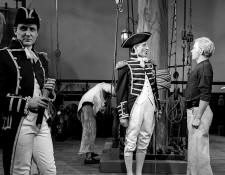
Patrick McNee, Basil Rathbone and William Shatner |
In his autobiography Milton Berle wrote the following about Rathbone:
| "Nobody ever had it worse on the show than Basil Rathbone—or at least, that's what he thought at the time. In fairness to him, it
must have been rough for a man of Basil's dignity to find himself in front
of the camera with Martha Raye and me. Both of us can go pretty wild in the low-comedy department when we forget our lines.
Which is exactly what happened in some sort of Sherlock Holmes takeoff that was
dreamed up for Basil's guest shot. We just ran wild around him, pushing,
shoving, ad libbing, mugging, swinging burlesque bladders. Mr. Rathbone looked stunned throughout the whole thing.
As soon as he got off stage, he said to the first person he met, 'Nevah again
will I work with those two f**king people! Nevah!' He was on the show
three weeks later, after everyone he knew congratulated him on how marvelous he
looked and on what a great flair for comedy he had displayed." |
—from Milton Berle, An Autobiography (paperback edition) by Milton Berle
with Haskel
Frankel (Dell Publishing, 1974), 307-308.
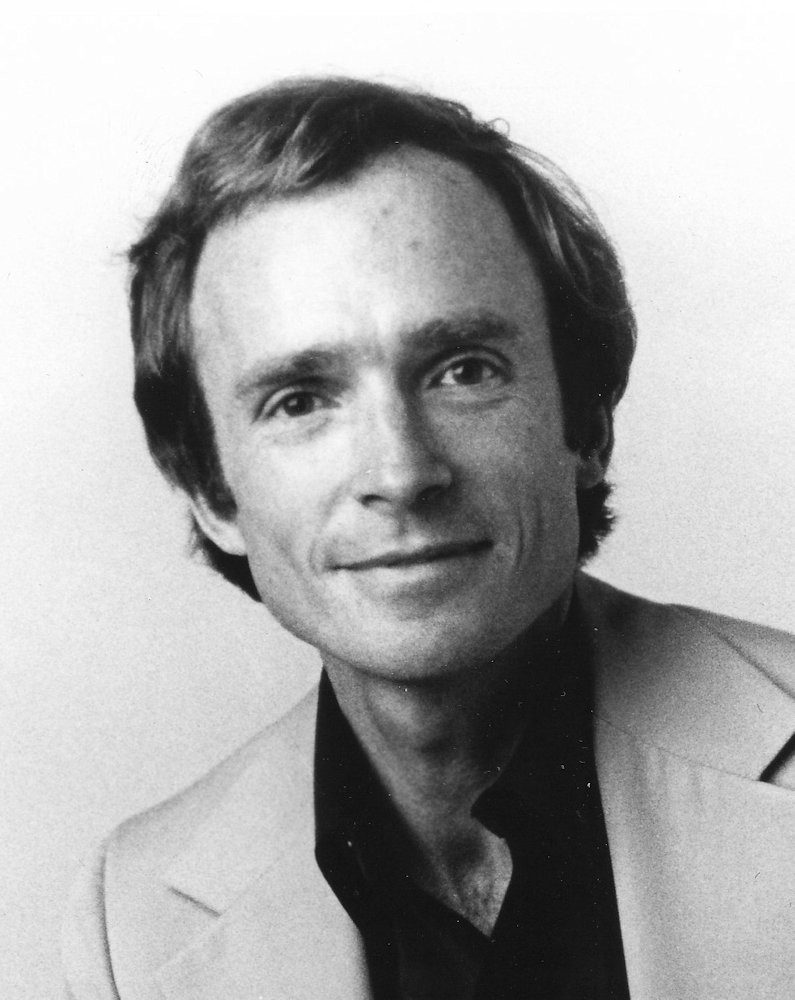
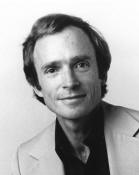
Dick Cavett,
a talk-show host known for
his wit and intimate interviewing style, remembers meeting
Basil Rathbone and hearing him tell an interesting story:
 I
have this story from none other than the great Basil Rathbone ... I hope it doesn’t sound too strange
to confess that, even as a kid, I had a sort of crush on Rathbone. I can’t
detect any erotic element in it; I just wanted to look, talk and act like
he did. I was in high school, and back then I knew him only as Sherlock
Holmes, but that was plenty. ... Where else would a kid my age meet Basil
Rathbone but in Lincoln, Neb.? He was there to narrate a huge
concert-drama event at the University of Nebraska, and he'd agreed
to meet informally with the drama students there. I played hooky and
went, of course. ... I bulldozed my way backstage, and there he
stood—not on the screen but feet from
me. I sidled up to where he was chatting before going on. There was
the inimitable voice (no impressionist has ever done him), and the
first words I heard him speak were, "Of course I only
made the one picture with Greta." ... I treasured every overheard
utterance—as in, "I seem unable to
conquer my fear of flying. I'm nervous as a kitten on an aeroplane."
Holmes, scared?, I mused. ... Let's get to the story Rathbone
told me some years later, when we were both in New York. I
have this story from none other than the great Basil Rathbone ... I hope it doesn’t sound too strange
to confess that, even as a kid, I had a sort of crush on Rathbone. I can’t
detect any erotic element in it; I just wanted to look, talk and act like
he did. I was in high school, and back then I knew him only as Sherlock
Holmes, but that was plenty. ... Where else would a kid my age meet Basil
Rathbone but in Lincoln, Neb.? He was there to narrate a huge
concert-drama event at the University of Nebraska, and he'd agreed
to meet informally with the drama students there. I played hooky and
went, of course. ... I bulldozed my way backstage, and there he
stood—not on the screen but feet from
me. I sidled up to where he was chatting before going on. There was
the inimitable voice (no impressionist has ever done him), and the
first words I heard him speak were, "Of course I only
made the one picture with Greta." ... I treasured every overheard
utterance—as in, "I seem unable to
conquer my fear of flying. I'm nervous as a kitten on an aeroplane."
Holmes, scared?, I mused. ... Let's get to the story Rathbone
told me some years later, when we were both in New York.Rathbone
was entertaining a friend one night at his home in the Hollywood
Hills. Both men were keenly interested in dogs and their breeding.
His friend had brought with him two handsome specimens. As it got
late, the two friends had a parting drink and called it a night. The
friend and the canines got into the car and drove away. but, sadly,
not very far.
As Rathbone turned to go back inside, he heard the screech of
brakes and the sickening sounds of a ghastly car crash. His friend
and the dogs were killed instantly. In deep shock, and with the
thought, "He was just standing here," pounding in his aching head,
Rathbone heard the damned phone begin ringing. Mechanically he
picked it up and heard the voice of the MGM studio's night
switchboard operator. "Sorry, Mr. Rathbone but I have a woman on the
line who simply must talk to you. She says it's desperately,
desperately important. ... She hopes you'll know what a certain
message means." ... The woman had a low and cultivated speaking
voice and identified herself as a trance medium and clairvoyant. ...
"I have for you, sir, what we term 'a calling of urgency,'" she
said. "It came to me with such impact that, although not knowing its
meaning, I simply had to find you. The message is brief. Here it is
in its entirety: 'Traveling very fast. No time to say good-bye.' And
then, 'There are no dogs here.'"
The next time I saw Rathbone ... I
thought he might have decided, looking back, that it had all been
some sort of bizarre coincidence, or maybe a highly original prank.
He said, “At the time, of course, I was quite shaken by it.” And
now? “I am still shaken by it.” |
Source:
https://archive.nytimes.com/opinionator.blogs.nytimes.com/2007/02/13/basil-rathbones-mysterious-message/
| Denis Higgins reports: I was a young reporter covering a luncheon meeting of the NY
Advertising Club around 1961 or 62. The
star attraction was Basil Rathbone, who gave the audience a half-hour of
readings from various literary sources. Also on the program was a young
singer named Merv Griffin. After the lunch, I saw Rathbone at
the coat check, so I walked up to him and introduced myself. I told
him how much I enjoyed his work, especially in the Sherlock Holmes
movies. His response: "How tiresome!" |
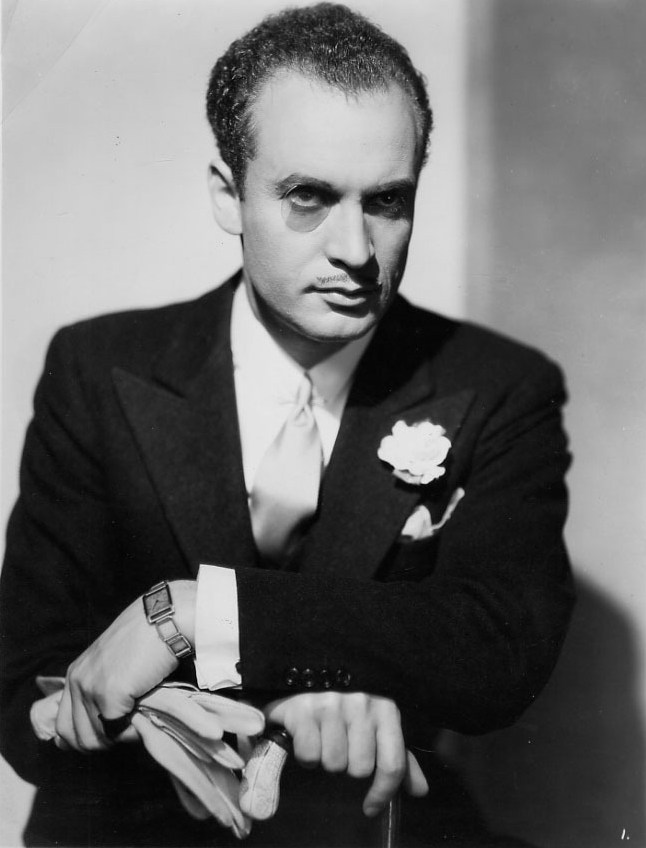
| A good friend of mine was an actor
named Gregory Gaye. He and Rathbone acted together in Pursuit to Algiers
and Tovarich*; Gregory Gaye played Russian villains. A close friend of Rathbone’s, Gregory used to dine with him at his home. He told me that the
guests would often end up dueling with swords throughout the house!
Gregory Gaye also told me that in
Pursuit to Algiers he had to hit Rathbone over the head with a rubber
gun. The first two tries were so soft that Rathbone told Gregory, "You're
wasting film. When you hit me, do it like you mean it." The next shot
Gregory really gave Rathbone a wallop. After the scene Rathbone said,
"Now that's believable, Greg." Gregory told me he just didn't want to hurt
his old friend.
R. Franks
* In Pursuit to
Algiers Gregory Gaye played Ravez, and in Tovarich he played Count Frederic
Brekenski.
|
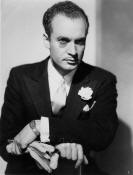
Gregory Gaye |
The following anecdotes about Rathbone are from Nigel Bruce's unpublished
memoirs. First, Nigel tells how he got the role of Dr. Watson. He was very
depressed after being in a play that was a failure ("Knights of
Song"). Then he received a telegram.
| "The telegram was
from Basil Rathbone who said: 'Do come back to Hollywood, Willie dear boy,
and play Doctor Watson to my Sherlock Holmes. We'll have great fun
together.' Basil can never realize how much that telegram cheered me up,
as when I received it, I was in the mood to put my head in a gas oven."
"Our Sherlock Holmes
pictures took between 18 and 22 days to make. Often we shot out of
continuity. The moment one sequence was ended, the scenery would be torn
down and the same stage used for a completely new set up. We learned our
entire parts before the picture commenced as one does for a stage play. This
meant we had no worries if the shooting schedule were changed and if the
story was told out of its continuity. Roy Neill was always open to
suggestions from Basil or myself and we always accompanied him to the daily
rushes in the projection room. Roy, Basil, myself and our Sherlock Holmes
casts always worked together as a happy and contented team."
Speaking of the Sherlock Holmes radio program, Nigel wrote: "We all got on like a
house on fire and not only is Basil Rathbone a very dear friend but he is
one of the most unselfish and generous actors with whom it has ever been my
pleasure to act. We had a great time together on the program and spent many hours playing golf at Riviera or Bel-Air.
Basil and I were evenly matched, both having handicaps of 10."
"In December [1944]
we took our radio program to Santa Barbara where we raised $190,000.00 for
the war bond drive. From there we traveled to San Francisco for the 6th
War Loan Drive. We spoke at numerous bond rallies, signed autographs and
sold bonds in two of the city's largest shops, met with popular Mayor
Lapham of San Francisco and with him visited the police headquarters where
we sold a bond to Chief of Police, Charles Dullea. Here we were also shown
many interesting relics of crime, and Basil caused a lot of laughter when
he told the chief that he was sorry to hear that they still had some
unsolved crimes in San Francisco as he and I solved every case we handled
with the greatest of ease once every week on Friday nights, and each case
only look us half an hour!!"
"At the end of this series Basil left Hollywood to act in a play which went
on an extended tour before opening later in New York. For some time Basil
had not been happy in the film city; he is a fine actor and he had felt that
he was not getting good enough parts and that he was always typed either as
Sherlock Holmes or as a villain in costume pictures. Very wisely he
therefore decided to return to the stage, which he always preferred and on
which he could play parts of his own choosing. My association with Basil had
been a very long one. We had acted together in 14 Sherlock Holmes pictures,
in the film of 'Frenchman's Creek' and on the radio in countless programs
since October 2nd, 1939. Ours had been a very happy association and one
which had brought me much publicity and a lot of money. During our long time
together Basil and I never had a row or any unpleasantness of any sort."
"I never worked with a nicer man than Basil, and I never acted with a more
unselfish or more cooperative actor."
|
Source: Sherlock Holmes Journal, Winter 1998
In 1920 Basil Rathbone starred with Constance Collier in
the play "Peter Ibbetson." Eleven-year-old Eugenie Misener, a
pupil of Italia Conti,
was the understudy for the part of the young girl played by Madeleine
Robertson. Her recollection is that the play opened at the Savoy
(London), then went down to Brighton, before returning to the Royal Court
Theatre. She had to be chaperoned whilst in Brighton but never actually
got on stage there or in London as Madeleine was never ill.
Later she went to see Basil as Iago in the "Othello" production at the
Royal Court Theatre. On that occasion, she went around to the Stage Door
and asked to see him, only to be rebuffed by the doorman. Persistent,
she waited for Basil to appear, and he immediately recognized her, and
called out "Ah, my little girl!" You can imagine what delight she
took in being invited in, one-up on the doorman and other would-be
admirers!
Sid Caesar shares this story of Basil Rathbone's
appearance on Your Show of Shows, a 90-minute television program that
was broadcast live:
| When I went out to introduce Basil, I said,
"Here ladies and gentlemen is . . ." I couldn't believe it, I forgot
his name. I had an hour and a half show in my head, and I couldn't
remember his name. So I began to stall: "Here is a man whom you've
seen play Sherlock Holmes many, many times. He's one of the most
experienced theater actors in the world . . ." But I still couldn't
think of his name. Finally someone wrote it down on a big piece of
cardboard and brought it close enough for me to see it. With great
relief, I said, "Mr. Basil Rathbone." Basil came out and he knew
what happened. He was very gracious about it, but he couldn't resist
saying, "I'd like to thank Mr. Sid Silvers for having me on." He got
even. |
Caesar's Hours, by Sid Caesar with Eddy Friedfeld
(New York: Public Affairs) 2003. pp. 250-251.
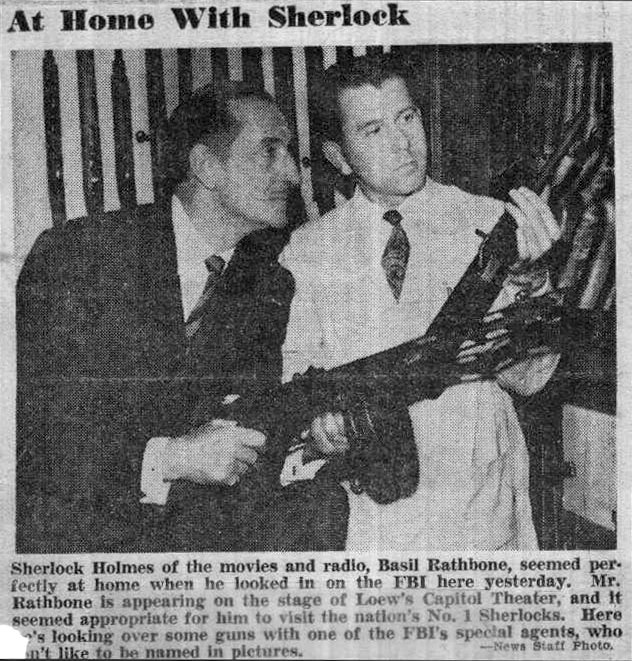
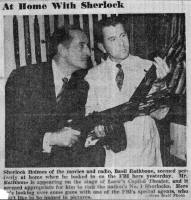 This
photo was taken of Basil and me while he was visiting the FBI in the
early 1950s. He was accompanied by Special Agent Ed Kemper from the
Bureau's Crime Records Section. Kemper was his guide throughout the
FBI Lab and in the normal course of business he would, following the
Lab tour, have been escorted to the basement of the Dept. of
Justice-FBI building where the Bureau's 25 yard pistol range was
located. In all probability Rathbone
watched a shooting demonstration by a FBI Firearms Instructor and shortly
thereafter had a meeting with Mr. Hoover himself, if he was "available" at
that time. As far as his tour of my unit (the Firearms Identification
Section) was concerned, Kemper and I showed him the collection of about
1500 hand guns and shoulder weapons, demonstrated firing test bullets into
the bullet recovery box in a sound proof room behind the gun collection,
explained a little bit about the science of Firearms Identification, and
told him how much we enjoyed meeting him. Kemper then led him to another
unit of the Laboratory (such as the Serology unit, Hair and Fiber unit to
name a few). Before leaving my unit Mr Rathbone shook my hand and
told me how much he appreciated the tour. This
photo was taken of Basil and me while he was visiting the FBI in the
early 1950s. He was accompanied by Special Agent Ed Kemper from the
Bureau's Crime Records Section. Kemper was his guide throughout the
FBI Lab and in the normal course of business he would, following the
Lab tour, have been escorted to the basement of the Dept. of
Justice-FBI building where the Bureau's 25 yard pistol range was
located. In all probability Rathbone
watched a shooting demonstration by a FBI Firearms Instructor and shortly
thereafter had a meeting with Mr. Hoover himself, if he was "available" at
that time. As far as his tour of my unit (the Firearms Identification
Section) was concerned, Kemper and I showed him the collection of about
1500 hand guns and shoulder weapons, demonstrated firing test bullets into
the bullet recovery box in a sound proof room behind the gun collection,
explained a little bit about the science of Firearms Identification, and
told him how much we enjoyed meeting him. Kemper then led him to another
unit of the Laboratory (such as the Serology unit, Hair and Fiber unit to
name a few). Before leaving my unit Mr Rathbone shook my hand and
told me how much he appreciated the tour.FBI Special Agent Richard J. Poppleton |
My father managed Mr. Rathbone during some of his speaking tours during the
1960s. He arranged for several visits that Mr. Rathbone made to South America.
My father recalled meeting with Mr. Rathbone and his wife, Ouida, in their NY
apartment and how Mr. Rathbone read aloud to him there. He said it was an
experience he would never forget and also expressed how extremely gracious both
Mr. Rathbone and his wife were to him.
Had I not been such a young, dopey kid at the time you can believe I
would've begged my father to let me join him. At any rate, I ended up with a
personally autographed photo signed, "Best Wishes, Basil Rathbone alias Sherlock
Holmes," which I treasure to this day.
Randy Winston,
New City, NY
| As a teenager in the
1950s, I used to idolize Basil Rathbone. On TV I loved him as Sherlock, Richard III,
and Guy of Gisbourne; I saw him live in Ashland, Ohio in one of his Evenings
with BR; yet my strongest high school memory was a Caedmon recording of Poe's
"Masque of the Red Death," where his ear-haunting timbre, range of colors, and
vocal virtuosity made an indelible impression. I subsequently went on to get a
Bachelor's and Master' s degree in Theatre, taught and directed on the college
level, and have worked as an actor off and on for close to 4 decades.
As I look back, I'm startled to think of all the
times I was influenced by Rathbone: I used Poe's "Red Death" in my own 1-man
shows; during a gig at the Colorado Shakespeare Festival, I vividly recall a
couple of us mounting an onstage duel and stealing bits from Robin vs. Sir Guy;
another time I was cast as Sergius in Shaw's "Arms and the Man" and was baffled
how to make myself credible as the romantic lead (old men and villains were my
normal fare)—but I experimented with adding a simple pencil-line mustache a la Rathbone, got the perfect look, and had a swell time in the role. What made Rathbone so extraordinary? First, he had colossal gifts:
a) the superb athletic ability, and not only in swordsmanship—I was startled to
be reminded that he was a perfectly capable hoofer (and patter singer) who
could hold his own in a music hall turn; b) the prodigious vocal
accomplishment—that bronze bass-baritone had remarkable power, range, and
variety—the icy chest register that made his villains so formidable, the head
voice that could supply surprising sweetness & warmth (e.g., your "Night
Before Christmas" clip, or his v.o. for Disney's "Mr. Toad," or his LP of "Robin
Hood" where he doesn't portray the baddie but Robin himself—and with a
lightness, bounce, and dash that are as convincing as they are unexpected). c)
the directness, economy, and subtlety of his work—I remember, years
ago, Everson suggesting that he would add "a touch of ham," but I honestly can't
see it. Over and over he underplays, relying on restraint, linear readings,
and choices that register swiftly. When you consider the undistinguished
material he often had to run with, the body of his work in his prime is
brilliant.
All in all, he was close to the ultimate actor: he could act, move, sing,
dance, and tackle an enormous range of media and styles. My only regret is
that he wasn't given a chance to film some of his "other" repertoire, Cassius,
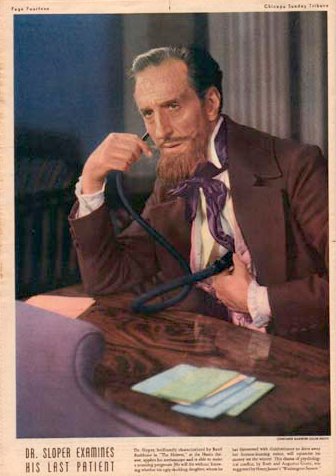
say, or Dr. Sloper. In short, he was one of the undisputable greats.
Rick Walter, Houston, Texas |
I first heard of Basil when I was around
seven years of age in 1972 and this is where I first saw him in Sherlock
Holmes films. He really was a great actor in those days and yes I'm a
fan of his in Sherlock Holmes movies.
I still watched him on TV over and over the
years. I already bought a book about him and I do
believe apart from his acting he was a good hearted gentleman. he always
seemed to have time to meet and talk to anyone.
An Irish Basil Rathbone supporter,
Mr. Ronan Meyler, Dublin, Ireland
| "I first met Mr. Rathbone when I worked on [The
Adventures of Sherlock Homes]. . . . I got to know Basil much more later
on, some years later when we did a stage version of SHERLOCK HOLMES.
That's when I really got to know him, because by that time I was grown up.
As a child, of course I didn't really get to know him except to see that
he was a great gentleman and an extremely pleasant person. Everybody liked
him very much. Of course, in those days, he was more famous for playing
villains, and he couldn't have been more different. He was a gentle and
really very charming man, and he was indeed very, very well liked by
everybody." Terry Kilburn, quoted in Scarlet Street #13
(Winter 1994), p. 53 |
I grew up in NYC/Manhattan
— the daughter of a
prominent physician (who by chance was Basil Rathbone's MD). I had always
been a fan of Mr. Rathbone's. . . sooooo, one day (the summer holidays had
already started and I was home from boarding school), my dad's secretary
called the house saying that my dad wanted me to come by the office (which
was quite close to our apartment) for luncheon. I headed over and waited
in the patient's waiting room. Ms. Bethany (dad's secretary/nurse) came in
and said that my dad was ready to see me... I went into his office and
lo-and-behold there standing in the middle of the room was Basil Rathbone!!!!
WOW... what a surprise!!!! Ms. Bethany took a picture of me facing him,
showing our profiles... I treasure that moment and the picture (which my
mum put into a cardboard frame which was then signed [at a later date] by
Mr. Rathbone.
Pam Taylor
Louise, a fellow Basil fan, shares the following
stories:
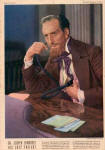 Among my happiest memories was meeting Basil Rathbone when he was doing
the radio program, Inspector Burke of Scotland Yard. My foster-father,
William Podmore, was playing Inspector Burke's sidekick, Sgt. Abernathy,
and I gave him no peace until he brought me to the studio to meet Basil. I had already seen
The Heiress, and I recognized his makeup as
Dr. Sloper; he said that there's so little time between the end of the
radio show and the start of the play that he couldn't afford to try to
make up at the theatre, and sometimes he couldn't catch a cab right away,
as well. I volunteered to have one waiting for him after Inspector
Burke finished, and did so for the remainder of the run. He was pleased,
and invited me to come backstage whenever I had time. You can be sure that
I took him up on this offer most Tuesday (I think) nights. In the play,
the Doctor dies several scenes before the end, and Basil had to hang
around for the curtain calls, so he seemed happy to have someone to chat
with besides his dresser, Johnny. Among my happiest memories was meeting Basil Rathbone when he was doing
the radio program, Inspector Burke of Scotland Yard. My foster-father,
William Podmore, was playing Inspector Burke's sidekick, Sgt. Abernathy,
and I gave him no peace until he brought me to the studio to meet Basil. I had already seen
The Heiress, and I recognized his makeup as
Dr. Sloper; he said that there's so little time between the end of the
radio show and the start of the play that he couldn't afford to try to
make up at the theatre, and sometimes he couldn't catch a cab right away,
as well. I volunteered to have one waiting for him after Inspector
Burke finished, and did so for the remainder of the run. He was pleased,
and invited me to come backstage whenever I had time. You can be sure that
I took him up on this offer most Tuesday (I think) nights. In the play,
the Doctor dies several scenes before the end, and Basil had to hang
around for the curtain calls, so he seemed happy to have someone to chat
with besides his dresser, Johnny.
Years later I traveled to a Maine Summer Stock theater to see Basil in
The Winslow Boy, a play which had been a favorite of mine from
the movie, and difficult to surpass, but he was superb, and what a
pleasure to see him in a sympathetic role. An memorable incident
occurred during the performance. At one point, Basil sat down at a
table to converse on the telephone. The chair literally collapsed
under him, and he took a very hard fall—definitely not in the
script. He got up carefully, taking his time to sort of check out
his anatomy to see if he was all in one piece, picked up the phone, and ad-libbed
an apology and explanation to the (of course non-existent) party on the
other end. The audience had, when he fell, gasped and were in a
shocked sort of silence, not sure of the situation. When the call
was completed, with the normal dialog, he hung up the phone, and,
reassured, the audience greeted him with a thunderous applause, both in
relief that he was all right, and in awe of his aplomb. |
Karen, a Rathbone fan in England relates this story:
"My mother knew Basil in England before and after the war,
and when I was very little, in about 1963, she took me to visit him for a
few days. I don't remember a thing about it, except being in this dark
place, with a brightly lit area, which apparently was a movie set, and
being picked up by a man in a black coat and tall black hat with silky
stuff tied on it, who was showing me round, and talking to me. There was a
mirror over a fireplace and some red chairs, and when he put me down he
told me not to trip over this big cable running along the ground."
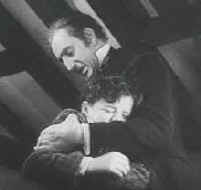 One evening in 1935 Basil and Ouida Rathbone were invited for dinner at the home of
Hosford and June Brackett and their three children. One of the now-grown children
relates this story:
"We had
recently seen Basil bash Freddy Bartholomew in 'David Copperfield,'
so when the Rathbones arrived, we hid from Basil in fear. After
a while we tentatively peeked around the corner to get a glimpse of our famous guest. Basil caught
us and escorted us back to the living
room just in time to see my father spill a tray of drinks onto Ouida
Rathbone's dress! But we had a nice evening anyway, and Basil signed our autograph books." |
In his biography of Basil Rathbone, Michael Druxman
relates an amusing story about Moritz, Basil's German Shepherd:
| "One
evening, Rathbone was walking with the dog along New York's 46th street,
when Moritz, unable to find a lamp post, decided to relieve himself on the
leg of a woman pedestrian. Basil, red-faced and at a loss for words, could
barely sputter out an apology. Luckily, the woman was so impressed at
meeting Basil Rathbone, that she told him to forget the whole matter and
went on her way." (Basil Rathbone: His Life and His Films,
pp. 25-26) |
Working With Basil
by David Macklin
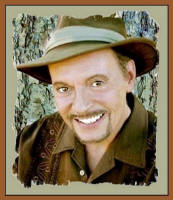 When I came to Hollywood to pursue my own acting career, I left The Basil Rathbone Club and for a while Basil himself behind. I was preoccupied with trying to make it in the movies and simply surviving.
A few years passed and the career was going pretty well. I was doing leads and guest star roles on TV and an occasional movie. So,
when I received an offer to do a part with little dialogue in a pilot film for 20th called Warbirds I was inclined to turn it down.
When my agent, Dorothy Maclin, told me that Basil Rathbone was reprising his role as Major Brand in this proposed series based on the great film
"The Dawn
Patrol," I jumped at it. When I came to Hollywood to pursue my own acting career, I left The Basil Rathbone Club and for a while Basil himself behind. I was preoccupied with trying to make it in the movies and simply surviving.
A few years passed and the career was going pretty well. I was doing leads and guest star roles on TV and an occasional movie. So,
when I received an offer to do a part with little dialogue in a pilot film for 20th called Warbirds I was inclined to turn it down.
When my agent, Dorothy Maclin, told me that Basil Rathbone was reprising his role as Major Brand in this proposed series based on the great film
"The Dawn
Patrol," I jumped at it.
The year was 1964 and it had been several years since I had last met Basil after one of his Theater Programs and knew he was getting a little long in the tooth. When I spotted him on the set in his chair working on his lines I realized he looked more frail than when I last saw him. I made my way over to him, more than a little nervous, and found that he was rather flustered himself and was muttering "Damn it Basil...get it right!" as he went over his lines.
After a few moments I decided to jump in and said "Mr. Rathbone?" He looked up and said "Yes?" I sputtered out, "I am David Macklin, I used to be David Mortashed and I was President of your fan club." He looked at me blankly with no sign of recognition. I continued, "You remember? I took over the club from Doris Devasier." He squinted and then smiled and said, "Oh! Are you Doris Devasier?" Well, you can imagine that I was a little taken aback. I thought I looked pretty butch in my air force uniform. I stuttered onward..."No, I'm David Macklin...I mean Mortashed...I mean I was David Mortashed....I am David Macklin now but I was Mortashed...David...And was your fan club president AFTER Doris Devasier." He looked at me again and laughed. "Yes, of course dear boy...forgive me. I am getting rather addled these days and I had a terrible flight with bad food (more on that later) and I have this monster speech coming up." We talked a bit about the old
days: Sherlock Holmes, Errol Flynn and movies versus theater. I told him that I still had the letters* he sent me and that I treasured them.
*Ed. note: These letters can be viewed on the "Letters
from Basil" page.
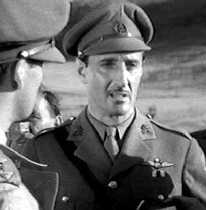 I could see he was still concerned about his lines so I asked if I could cue him which he gratefully accepted. It was wonderful. Here I was helping this marvelous actor who had given us so many years of inspiration and enjoyment. I cued Basil Rathbone and we worked on word associations that would spark his memory and soon he was in control and relaxed into the role. It was great to see him as he was in Sherlock Holmes,
"The Dawn Patrol" and so many of his classic roles. I was so moved that I got tears in my eyes and choked up a bit. He seemed to understand and patted me on the knee and murmured, "Quite right...quite right old boy." Then he laughed and said, "Doris Devasier indeed!" I could see he was still concerned about his lines so I asked if I could cue him which he gratefully accepted. It was wonderful. Here I was helping this marvelous actor who had given us so many years of inspiration and enjoyment. I cued Basil Rathbone and we worked on word associations that would spark his memory and soon he was in control and relaxed into the role. It was great to see him as he was in Sherlock Holmes,
"The Dawn Patrol" and so many of his classic roles. I was so moved that I got tears in my eyes and choked up a bit. He seemed to understand and patted me on the knee and murmured, "Quite right...quite right old boy." Then he laughed and said, "Doris Devasier indeed!"
Soon it was time to tackle Basil's big scene. He started off a little shaky, muttering again, "Damn it Basil...get it right!" But shortly he had it down and we went for a take. The cameras were rolling and he was doing fine when suddenly he
broke wind...a rather prolonged B flat. Like the pro he was, he didn't yell CUT and went on with the scene as did we flyboys who surrounded him.
After the take, he broke out laughing and said "Sorry about the ad lib." The whole set laughed with him and when we settled down the sound man said, "It's OK. We are clear! No overlaps." Cheers and laughter rolled over the set. The take was printed, we did the coverage and moved on with a delightful day of shooting.
The next day I drove Basil as Major Brand around 20th's great back lot in a jeep for some location shots. To tell the truth I had never driven a jeep before and it was a bit of a jerky bumpy ride. Basil remarked, "Dear boy! You are shaking up my innards a bit." I said, "Sorry Sir, but they didn't teach jeep driving in drama school." To which he replied "Quite right! Carry on!"
It was a glorious day and the last time either of us saw the back lot of 20th Century Fox. I remember Basil Rathbone looking wistfully around at the green rolling hills of
the lot and saying, "I have many fond memories of this place. It will all be glass and concrete soon." And so it came to pass. After the "Cleopatra" debacle 20th sold the back lot and it soon became the great conglomeration of marble and glass known as Century City.
A few years later I was vacationing in Laguna Beach. While lounging on the beach I heard on the radio that Basil Rathbone had died. I went to my motel room and spent the rest of the day there full of sadness and regret. Why hadn't I stayed in contact with Basil? Why didn't I get a photo with him? Why didn't I at least have him autograph my script? Who could ever replace this truly gracious, witty, kind man and magnificent actor?
| David Macklin also had these memories of Basil: "When talking with Basil Rathbone at Ohio Wesleyan and on the set, I told him that it was his Sherlock Holmes portrayal that turned me on to the Holmes canon (the original Conan Doyle stories), and that it was an inestimable gift to me. I added,
'Can you imagine how many other people were also so affected?' He replied,
'Yes, I know, but one would like to be known for something else.' I said,
'You are! And the reason I have seen so much of your work is because your Sherlock Holmes turned me on to
you.' He smiled at that remark, and I'd like to think he was pleased." |
|




















.jpg)